
Let’s Assay the Way!
We were in deep currency chaos back in 1790: war debt, foreign coins, a surplus of Revolutionary dollars “not worth a Continental”, plus a Constitutional prohibition against states issuing their own money.
As the world’s youngest nation, we were teetering on bankruptcy.
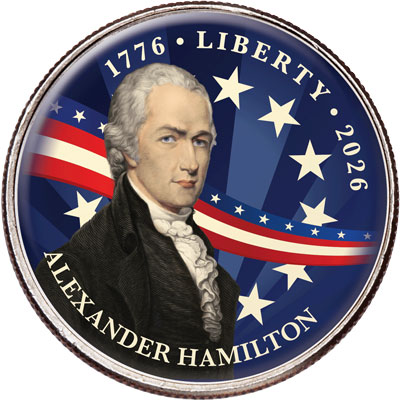
But not for long! Founding Father Alexander Hamilton accepted President Washington’s invite to be America’s first Treasury Secretary. In January of 1791, the former military aide-de-camp released a meticulously detailed 14,000-word Report on the Establishment of a Mint which emphasized “…every separate mass of standard gold or silver, which shall be made into coins… shall be assayed…”
Assayed?
Yes. Testing for weight and precious metal purity – it had been a practice since the dawn of time, or at least 7th century B.C. in Greece. Hamilton had used Spanish reales to assay the value of silver coins so the private Bank of New York he was starting could open in 1784. The bank’s goal was to encourage post-war development in New York.
To earn investor trust, the bank needed to verify the weight and purity of precious metal in circulating coins it would use as collateral. Eventually, the bank would loan money for the successful construction of the Erie Canal.
In his report, Hamilton argued for assaying gold and silver to establish a base line for and build trust in the new U.S. decimal currency he also was proposing. An assay office would be set up in a mint in Philadelphia. Congress agreed and passed the Coinage Act of 1792. Before too long, testing and minting soon followed, and America was up and running!
Three decades into the next century, however, a different kind of currency chaos put in an appearance.
750 Miles from Philadelphia
Westward expansion after the 1803 Louisiana Purchase and the discovery of rich veins of gold, silver, plus copper, prompted a singular reaction back East. “Rather than expend a large sum for coinage mint in these new, and largely unproven, mining districts, the Treasury encouraged Congress to approve a series of U.S. Assay Offices,” wrote numismatist Roger W. Burdette in his well-researched book From Mine to Mint.
“As additional precious metal discoveries were made, more local assay offices were opened. Remote towns such as Deadwood, South Dakota…boasted an official government assay office, and simultaneously yearned for the prestige of a national branch mint…”
Nowhere was that aspiration stronger than New Orleans, strategically located on the Mississippi River with immediate access to the Gulf of Mexico. An assay office opened there in 1835. In three years, it was part of a full-fledged mint, taking in bars and ore not only from U.S. mining interests, but also from Spanish colonies in the western hemisphere.
“Unlike mints in most other countries, the United States mints accepted deposits of gold and silver directly from citizens in any amount over $100….In additional [sic] to domestic mining, silver was imported from Mexico through the port of New Orleans,” according to Roger.
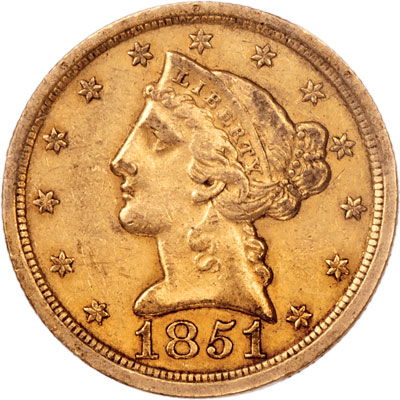
Of all the federal mint locations, New Orleans had the most colorful history, surviving decades of political upheaval, closures and reopenings. Here’s an early Liberty Head gold coin issued 10 years before operations were suspended because of the Civil War. When the facility reopened in 1876, it was as an assay office.
Minting resumed in 1879, the year New Orleans struck its first Morgan silver dollars. Collectors who are just starting to look for the coveted “O” mint mark often consider this set from the first five years of mintage. But in 1909, minting in the Crescent City stopped forever. Operations returned to the facility’s original role as a regional testing office. In 1932, the federal government decommissioned it.
Mining the Bigger Picture
Ready for a slight detour into mining history to understand assaying?
“Being a chemistry professor, my special interest was the assay office at the smelter,” wrote Wayne Wesolowski for a blog devoted to HO scale narrow gauge railroad modelers. “I took many photos and measurements which, after only a 50-year hiatus, allowed me to create the model for this article. The building today is still filled with crushers, mills, furnaces and the tools needed to process large numbers of samples each day.”
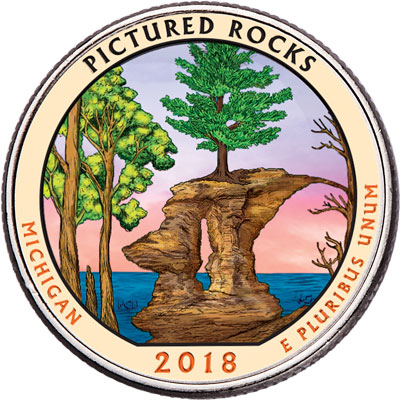
Wayne was writing about family trips to the Quincy Mining Company in “Copper Country” near the rugged shores of Lake Superior. Also known as Michigan’s Upper Peninsula, it was the region’s Indigenous Peoples who first discovered copper and used the metal for practical tools and weapons as well as personal ornaments and spiritual items. The copper from here was used to mint the first Indian Head Cents in 1859.
“Historians have not paid particular attention to the assayer,” noted Robert L. Spude, past president of the Mining History Association in “Men of Scope: The Assayer and the Western Mining Community 1840-1920.”
Seeking to redress that vacancy, Spude consulted a number of sources, not only to describe how several different assay “shops” looked and operated, but also to identify a few of the mavericks who pursued this profession. My favorite was Nellie Neal Lawing. She operated an assay shop in Cripple Creek, CO when her husband wasn’t around to test miners’ discoveries. Eventually, the Missouri native divorced him, then heeded the siren call of the Klondike Gold Rush. Noted Robert, “As Alaska Nellie” [she] became a famed trail-side road-house operator in the Far North.”
The Denali National Park and Preserve in Alaska has a rich history tied to goldmining and this handsome quarter generously layered in 24k gold might be a glam way to remember the fearless frontier woman.
An Unauthorized Assay Office
As one measure of how wild the West was, consider the sprawling and adjacent territories of western Kansas and southwestern Nebraska. The 1858 discovery of gold in the southern Rockies prompted Congress to redraw the boundaries of the first two to create a third, and new, territory. Its name came from the region’s Spanish influence (yes, despite French control). The word for red was colorado.
Here’s another example that’s more directly related to currency chaos: The nearest assay office to the Colorado Gold Rush was not authorized by Congress. So, Clark, Gruber & Co. opened a small and sturdy brick building that served triple duty as an assay office, coin minting facility and bank. It met miners’ needs to have their gold melted, weighed, tested and stored, if the miners preferred.
Finally authorized by Congress in 1862, the federal government bought Clark, Gruber & Co.’s operations. The following year an official Denver Assay Office opened. But progress was slow. It wasn’t until 1906 that the Denver Mint we recognize today was built.
Between 1906-and 1931, this mint struck that quartet of gold coins featuring America’s national symbol: the Quarter Eagle with an assigned value of $2.50; the Half Eagle at $5; the Eagle at $10 and also known as an Indian Head Gold coin, and the Double Eagle at $20.
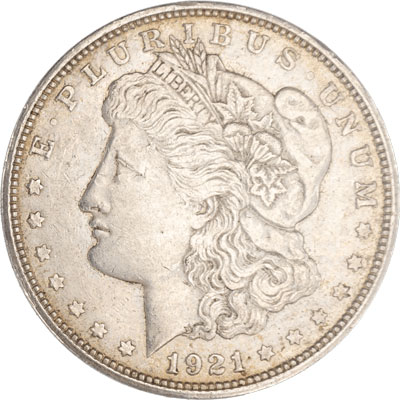
Then came 1921 and the immediate commercial need to have a circulating silver dollar while the U.S. Mint waited for a formal decision on the Peace Dollar design. This was the one year, and the only year, the Denver Mint issued Morgan dollars.
Taking your Showcase on the Road
If you’re looking to visit an assay museum – with your Showcase! – you could put the Quincy Mining Company in Hancock, MI on your itinerary. It’s open year round and is part of the larger Keweenaw National Historic Park.
Then there are these two sites in Colorado, both with seasonal hours:
- James F. Bailey Assay Office Museum in Boulder is a 30-mile drive from the Denver Mint. It honors a local hard-rock miner and member of the prominent Bailey family of miners in the community known as Wallstreet. Between 1901 and 1907, the family operated an assay office for local miners. Today, it’s a museum featuring original ore-testing equipment.
- Cripple Creek District Museum is a compound of five historic buildings, each individually related to some aspect of mining, including an assay office. Mentioned in this Heads & Tails blog, Cripple Creek is a little over 90 miles from the Mile High Mint.
We’d love to hear if you made it to these museums and even the Denver Mint, which is open for tours! Get a picture taken of you and your Showcase, and send us the details. We’ll run your adventure sussing out coinage history in a future issue of the catalog.
Send your photo, text and contact info in an email to Photos@LittletonCoin.com. In the subject line put: Where I’ve been with my Showcase.
SOURCES
Burdette, Roger W. From Mine to Mint: American Coinage Operations and Technology 1833-1937. Seneca Mill Press LLC. 2013
Gordon, John Steele. “From the Vault: Alexander Hamilton, banker.” July 24, 2025. ABA Banking Journal. https://bankingjournal.aba.com/2025/07/from-the-vault-alexander-hamilton-banker/
Mather, Sandra F., PhD.“The Assay Process.” Breckenridge (CO) History. https://breckhistory.org/the-history-of-breckenridge-co-the-assay-process/
Online Library of Liberty. “Part of: The Works of Alexander Hamilton, (Federal Edition), 12 vols. The Works of Alexander Hamilton, (Federal Edition), vol. 4” https://oll.libertyfund.org/titles/lodge-the-works-of-alexander-hamilton-federal-edition-vol-4
Spude, Robert L. “Men of Scope: The Assayer and the Western Mining Community 1840-1920.” 2013 Mining History Journal. https://www.mininghistoryassociation.org/Journal/MHJ-v20-2013-Spude.pdf
Sylla, Richard. “Alexander Hamilton and the US Financial Revolution.” History Now, Issue 77 (Winter 2025). https://www.gilderlehrman.org/history-resources/essays/alexander-hamilton-and-us-financial-revolution
U.S. Department of the Treasury. “Alexander Hamilton (1789-1795).” https://home.treasury.gov/about/history/prior-secretaries/alexander-hamilton-1789-1795
Wesolowski, Wayne. “Quincy Mining Co. Assay Office.” On30Annual. White River Productions. August 3, 2022. https://on30annual.com/quincy-mining-co-assay-office
Wright, Robert E. and Cowen, David J. “Financial Founding Fathers: The Men Who Made America Rich: Alexander Hamilton.” Excerpt. https://press.uchicago.edu/Misc/Chicago/910687.h

