

American Folklore Across the Nation
Just like coins, folklore has a special way of bringing people together. From tall tales that we’ve heard before, songs that we all sing and figures that represent the spirit of America, folklore has become ingrained in everyday life over the last 250 years.
In our first look at American folklore, we discussed stories from the days of the Revolutionary War. And boy, was there a lot to talk about! Now, we’re going to check out some of the folklore that has popped up since then… as well as some that actually predates the thirteen colonies.
Home on the Range
Wide open spaces filled with buffalo roaming the plains. A rider on horseback racing across the frontier to deliver mail. Saloon doors swinging open as outlaws and U.S. Marshals enter to grab a seat and take a drink. These moments – and more – became the heartbeat of the Wild West.

Look at the legend of The Lost Dutchman’s Gold Mine in Arizona’s Superstition Mountains. According to local history, the Peralta family from Northern Mexico had originally discovered gold in the mountains during the 1840s. Unfortunately for the family, it didn’t take long for bandits to hunt them down in search of the Peralta’s hidden gold mine. Several decades after their untimely deaths, a man named Jacob Waltz went in search of the mine with a partner.
After amassing quite the collection of gold, Waltz’s partner was killed – whether by Native Americans or Waltz himself is up for debate. Years later, while on his deathbed, Waltz had revealed the location of the hoard to his neighbor, Julia Thomas. Unable to find the mine herself, Julia began making maps of the area for people searching for the treasure. Today, more than a century after his death, people continue to hike the mountain range searching for Waltz’s lost gold.
A few states away, a new American folklore hero was brought to life. Believed to be originally told around campfires in the 1800s, the first well-known story about this particular cowboy was published in the early 20th century. Edward O’Reilly’s Saga of Pecos Bill chronicled the hijinks of Pecos Bill and made him an instant sensation.
Said to be the youngest of 18 children, Pecos Bill lived in the Lone Star State. After falling out of his family’s wagon and into the Pecos River as a small child, Bill was adopted by a pack of coyotes. Years later, Bill’s brother stumbled upon him. Finally, after lots of convincing that he wasn’t in fact a coyote, Bill left the pack to become a cowboy.
Credited with inventing the lasso, Pecos Bill caught (and rode!) a cyclone, roped an entire herd of cattle at once and used a rattlesnake as a whip. A cowboy through and through, he also rode a mountain lion all across the Southwest when he wasn’t on his trusty steed, Widow-Maker. As America moved into a more modern age, Pecos Bill remained the embodiment of the Wild West with his rugged frontier spirit.
Old Stormalong
Here in the Northeast, we have plenty of our own tall tales to go around. From Massachusetts’ Bridgewater Triangle to Jigger Johnson in northern New Hampshire and Colonel Buck’s cursed footprint in Maine, there’s lots of folklore to choose from.
But perhaps none is more iconic than the tale of Captain Alfred Bulltop Stormalong.
Calling the shores of Cape Cod home, Alfred Stormalong was rumored to stand 30 feet tall by the time he was a young teenager – making him the ultimate sailor. Able to see further than his shipmates, Stormalong was quickly made the ship’s lookout as he was able to spot pirate ships easily. And in one story, because he was able to give the ship’s crew plenty of warning, the deck was slathered in molasses so that the pirates wouldn’t be able to board the ship.
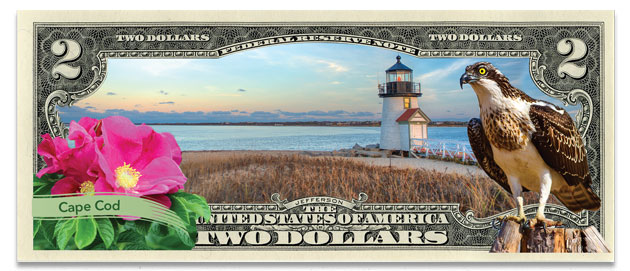
Of course, a man that tall needed a vessel as equally impressive. Enter the Courser, a ship so big that it wasn’t able to dock in Boston Harbor and its crew required horses to reach one end of the ship from the other. While the masts on Captain Stormalong’s boat were so large that they needed to be collapsible otherwise they would reach the Moon.
During a trip through the English Channel (the ship’s first and only!), it’s said that the Courser became stuck on the Gray Cliffs of Dover. No matter what Old Stormalong or his crew did, it would not move. Finally, Stormalong had an idea – he would make the hull of the ship slippery with soap. It worked! The Courser was able to move again, although the soap turned the gray cliffs into the White Cliffs of Dover we know today.
Native American Folklore
For tens of thousands of years, Native Americans have called the United States home. And in that time, each tribe has developed its own rich folklore.
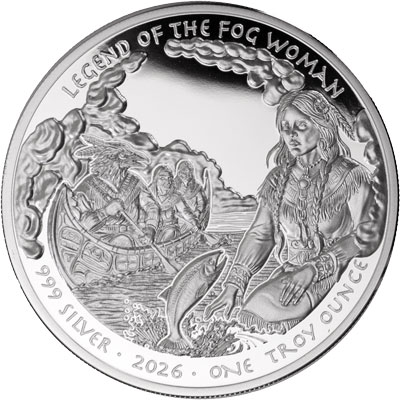
Just look to the Tlingit Peoples of Alaska. In the story of the Fog Woman, Raven, a popular character in many of the tribe’s stories, married the daughter of Chief Fog-Over-The-Salmon. For a time, everything was wonderful. The young woman took care of Raven by feeding him salmon and he cherished her as he promised her father. However, things turned sour when Raven spoke harshly to her. Hurt by Raven’s words, the young woman ran for the water, and the salmon she had created followed, where she disappeared in front of Raven’s eyes as fog.
A popular legend about creation in Native American culture, particularly in the Northeast among the Iroquois, Oneida and Lenape Peoples, is Turtle Island. Long ago, before even the Moon, stars and sun existed, the Earth was covered in water and filled with creatures who lived in it.
One day, the Great Spirit – who resided above the world – sent his daughter, Sky Woman, down to Earth. As she came closer and closer to the water-logged Earth, the animals became concerned for her as Sky Woman had no dry place to land. From the depths, a turtle, who had been summoned for Sky Woman to land on, had mud placed upon its back and the continent of North America was made.
But perhaps the most well-known figure in Native American folklore, especially among the Sioux People, is Iktómi. Often depicted as a spider or a human with spider characteristics, Iktómi is typically referred to as “the trickster.” However, his role can be that of hero, villain, wise mediator or trickster depending on the story he appears in.
In the story of the dreamcatcher, Iktómi pauses his wily ways when he speaks to a Lakota elder. He explains the circle of life and how we are all affected by good and bad forces. But by listening to the good forces and placing trust in the Great Spirit, we can be guided onto the right path. By the time Iktómi was done explaining this, he had created the dreamcatcher. Gifting it to the Lakota elder, he advised the man to hang it so the good would filter out from the bad.
Here’s to 250 Years (and many more) of Folklore!
Folklore isn’t just about things that go bump in the night; it’s part of the ongoing story that makes a country so wonderful and unique. And here in America, we’re lucky to have so many rich tales offering different perspectives and lessons.
What are some of your favorite folklore tales from your neck of the woods? Are there any American folklore heroes you’d like to see honored on coins or paper money some day?
Tell me in the comments below!
Sources:
Superstition Mountain. “The Legend of the Lost Dutchman State Park Arizona.” Accessed June 29, 2026. https://www.superstitionmountain.com/the-legend-of-the-lost-dutchman-state-park-arizona-260c809.html
Ritter, Mario. “‘Pecos Bill,’ An American Folk Tale.” Accessed June 29, 2026. https://learningenglish.voanews.com/a/pecos-bill-an-american-folk-tale/4773695.html
Dziak, Mark. “Alfred Bulltop Stormalong (folk hero).” Accessed June 29, 2026. https://www.ebsco.com/research-starters/literature-and-writing/alfred-bulltop-stormalong-folk-hero
Alaska Native Knowledge Network. “Raven and the Fog Woman.” Accessed June 30, 2026. http://www.ankn.uaf.edu/iks/subsistence/tlingit/fogwoman.html
Oneida Indian Nation. “The Haudenosaunee Creation story.” Accessed June 30, 2026. https://www.oneidaindiannation.com/the-haudenosaunee-creation-story
Mark, Joshua J. “Iktomi Tales.” Accessed June 30, 2026. https://www.worldhistory.org/article/2443/iktomi-tales

