
250 Years of American Folklore
The United States of America, forged in liberty and united in justice, has for the last 250 years been a rich melting pot. Formed with a strong foundation, Americans have a robust sense of cultural identity rooted in documents such as the Declaration of Independence and the U.S. Constitution as well as national symbols like the Bald Eagle.
But there’s something else that brings us together as well.
American folklore has bolstered the spirits of America’s citizens since the days of the American Revolution. Today, tales about the father of the United States, heroes of the Wild West and modern-day icons have become part of the fabric that makes up the United States of America.
What is Folklore?
Well, if you look in the Merriam-Webster Dictionary, folklore is defined as “traditional customs, tales, sayings or art forms preserved among a people.” And for thousands of years, humans have used this time-honored tradition as a way to bring people together.
Okay, now you might be wondering; how does folklore really bring people together?
- Entertainment – this one may seem a little obvious. However, before the invention of television or the world wide web, sitting around the fire after a long day with family and friends meant that people would tell each other stories. Whether those anecdotes came from places like the Bible or were just things that the individual had witnessed or even heard about, these stories served as a way to share information.
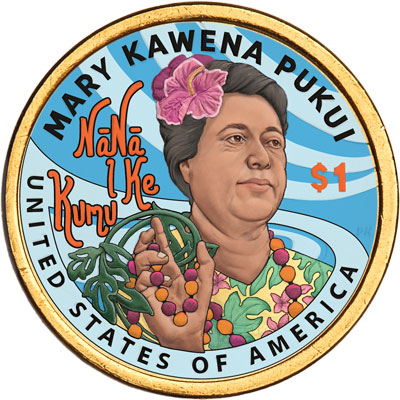
- Passing down a region’s history – for millennia, humans have used oral storytelling to teach their children about their culture. Thanks to narratives from places like the islands of Hawai’i or the traditional dances from Indonesia, those traditions have helped to preserve the world’s folklore for future generations.
- Reinforcing morals – perhaps one of the most important tasks of parenthood is ensuring that a child’s moral compass is secure. By using figures like Santa Claus or one of Aesop’s iconic fables like “The Boy Who Cried Wolf,” parents have tried to teach children right from wrong for generations.
The Father of Our Nation
During his life, George Washington was the general that led the United States to victory during the American Revolution and the new country’s first president. But it wasn’t until after his death in 1799, that Washington became the stuff of legend as Americans looked to connect with the nation’s beloved figurehead. So, it’s really no surprise that he’s become such a prominent figure in American folklore over the last 250 years.
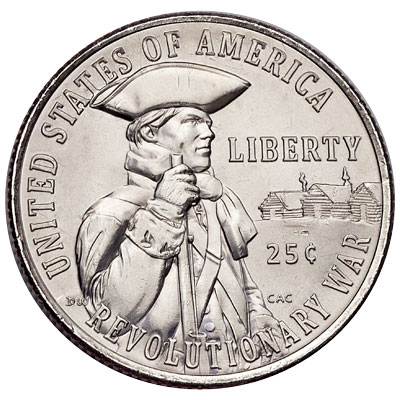
Maybe one of the best-known tales about George Washington takes place well before the start of the Revolutionary War. Since its first telling in Mason Locke Weems’ biography of Washington, it has served as a reminder of how the nation’s first Commander in Chief was the epitome of American ideals – even from childhood!
At just six-years-old, George Washington was out chopping wood on Ferry Farm (his childhood home) after receiving a hatchet. Overzealous, the young boy chopped down one of his father’s cherry trees. When Washington’s father saw what had been done to the tree, he asked whether the young boy had been the one to chop the tree. Distraught at having upset his father, the six-year-old Washington replied, “Father, I cannot tell a lie; I cut the tree.” Surprised, and pleased, by his son’s honesty, Washington’s father forgave him.
A touching moral lesson, the tale of Washington and the cherry tree has been told to generations of young Americans. Although, the story of George Washington and the Potomac River has a special place here in our hearts at Littleton!
Known for his athletic prowess, it’s said that Washington, who stood on the shore of the Potomac River, skipped a silver dollar across the mile-wide river to the other side. Later on, Washington’s step-grandson, George Washington Parke Custis, did correct the record – it had been a piece of slate not a silver dollar. After all, the first U.S. silver dollar was struck in 1794 (well after Washington made that impressive throw).
Women of the Revolution
Marching proudly behind George Washington in American folklore, are some of America’s favorite colonial women.
As the American Revolution continued, it was common for wives of the Continental soldiers to accompany them at the camps. Often, they were also on the battlefield helping the wounded or bringing water to the troops as the battle raged. Amongst those camp followers? A certain Molly Pitcher.
During the Battle of Monmouth, Molly’s husband became wounded. Determined to not let the British win, Molly took over for him at the cannon where a cannonball went sailing between her legs. Unconcerned, she continued to fire the cannon until the end of the battle. Historians today believe that “Molly Pitcher” is a conglomeration of multiple women – Mary Ludwig Hays, Margaret Corbin and other women who picked up the fight for freedom when their husbands could not.
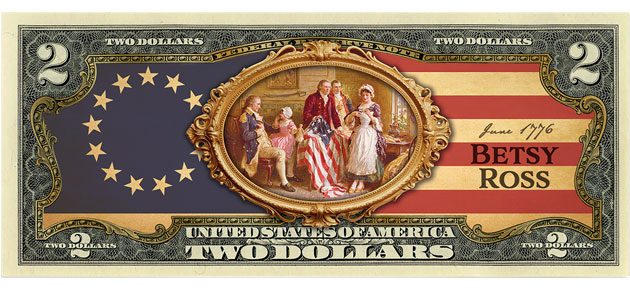
According to folklore, Pennsylvania’s own Betsy Ross, an expert seamstress, played a key role in the Revolution. Approached by General Washington, George Ross and Robert Morris in 1776, she was commissioned to make a flag to unite the Continental Army. As the story goes, Washington had brought a rough draft with him that included stars with six points. But, after showing Washington and the other two men stars with just five points, the three men agreed it was perfect for the new flag.
Next Time…
Over the last 250 years, folklore has become a staple in America’s story. Especially these stories from the days of the American Revolution which unite us all under a common theme – love of country.
But American folklore doesn’t end there. In fact, that’s just where it gets started!
Next time, we’ll take a look into figures from the Wild West, New England and everywhere in between. Stay tuned for Part 2!
Sources:
Richardson, Jay. “Cherry Tree Myth.” Accessed June 9, 2026. https://www.mountvernon.org/library/digitalhistory/digital-encyclopedia/article/cherry-tree-myth
National Park Service. “George Washington and the Cherry Tree.” Accessed June 9, 2026. https://www.nps.gov/articles/george-washington-and-the-cherry-tree.htm
Teipe, Emily J. “Will the Real Molly Pitcher Please Stand Up?” Accessed June 9, 2026. https://www.archives.gov/publications/prologue/1999/summer/pitcher.html
American Battlefield Trust. “Molly Pitcher” Accessed June 9, 2026. https://www.battlefields.org/learn/biographies/molly-pitcher
Alexander, Kerri Lee. “Betsy Ross” Accessed June 9, 2026. https://www.womenshistory.org/education-resources/biographies/betsy-ross

