
Building a Coin Book Collection: Essential Guides Every Collector Should Own
There’s something quietly satisfying about a well-worn coin book.
Long before online databases and mobile apps, collectors built their knowledge one page at a time. And even today, a thoughtfully assembled coin book collection remains one of the most valuable tools a numismatist can own.
Whether you collect coins, paper money or both, the right books do more than provide information. They give context. They tell stories. And in some cases, they become collectibles in their own right.
Let’s take a closer look at the most useful coin books for collectors – and why they deserve a place on your shelf.
Why Every Collector Needs a Coin Book Collection
In today’s hyper-connected world, it’s easy to assume everything you need to know is available online. But seasoned collectors know better.
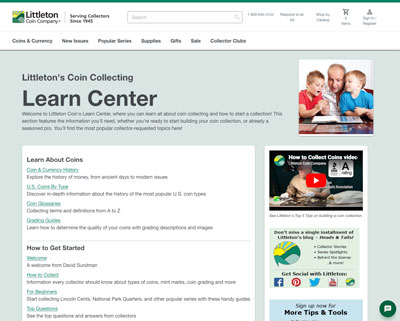
Yes, there are some superb resources out there. Sites like the Newman Numismatic Portal… American Numismatic Society… American Numismatic Association. And, of course, Littleton Coin Company’s own Coin Collecting Learn Center.
But there are also many sites with inaccurate or even made up information. Especially since AI chatbots like Chat GPT… Claude… Copilot… Gemini and Grok became widely available to the public.
Which is why I’ll always keep a well-stocked bookshelf.
A good coin book offers carefully researched, vetted information you can trust. It puts mintages, specifications, and historical background at your fingertips in a way that’s often more reliable than scattered online sources.
And more importantly, books encourage deeper learning. You might open one searching for an answer about one coin… then find yourself discovering fascinating facts and tidbits about another.
A good coin book collection is both a handy quick-reference and a key that unlocks a deeper understanding of your hobby.
It helps your collection grow from an accumulation of interesting items into something more meaningful… a gateway to the past, which you can share with family, friends and fellow collectors.
The Cornerstone of Collecting: The Red Book
No coin book collection would be complete without The Official Red Book: A Guide Book of United States Coins.
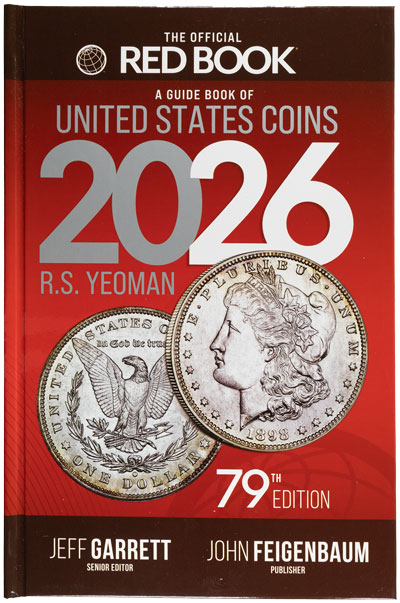
First published in 1946 – and updated annually ever since – the Red Book is widely considered the go-to guide for collectors of U.S. coins. As well as one of the most important references in American numismatics.
Inside its pages, you’ll find detailed listings of U.S. coins from colonial issues to modern releases. Including but not limited to:
- Mintage figures and specifications
- Historical background for each series
- Descriptions of denominations, types and varieties
- Retail pricing by grade
… and so much more. But what makes the Red Book special isn’t just the data. It’s the way it brings the story of American coinage to life.
For many collectors, it’s the first book they ever owned. And the one they return to again and again.
Beyond the Basics: Specialized Coin Guides
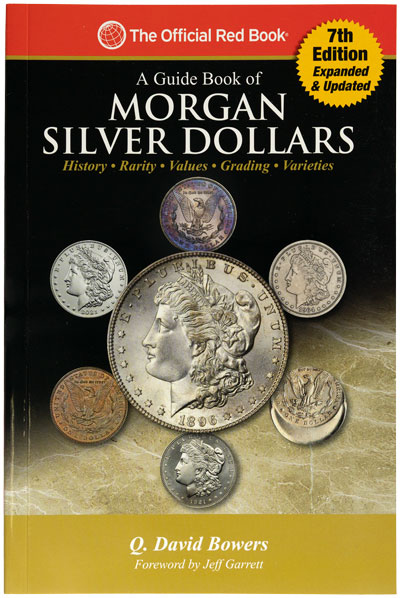
The Red Book is an excellent resource. But as you build your collection and become a more experienced collector, chances are you’ll want or need information it doesn’t contain.
That’s where specialized guides come in. Instead of covering all American coinage, they focus on individual series or themes.
This allows them to go into much more detail, and provide data and insights you won’t find in general references. Things like specific die varieties, strike characteristics and historical nuances
These books are especially useful when building a focused collection. Because they help you understand what to look for, and what makes each coin unique.
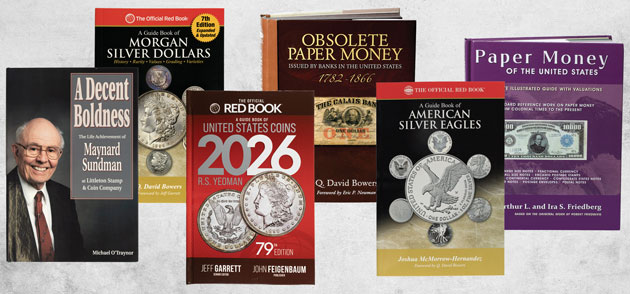
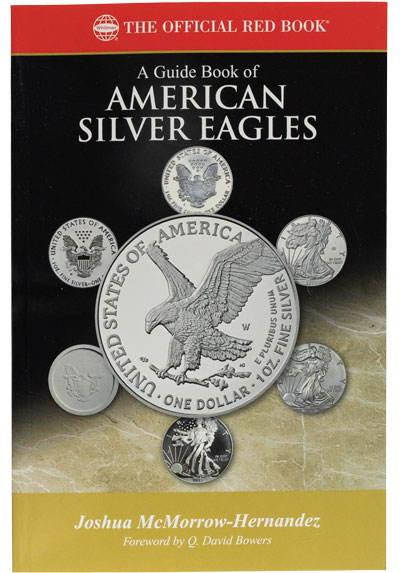
You can find specialized coin guides for pretty much every series, including Morgan silver dollars and American Silver Eagles.
Don’t Overlook Paper Money References
Coin collectors often branch out into paper currency. And when they do, they need new references in their library.
One of the most respected titles in this area is Paper Money of the United States by Arthur L. and Ira S. Friedberg.
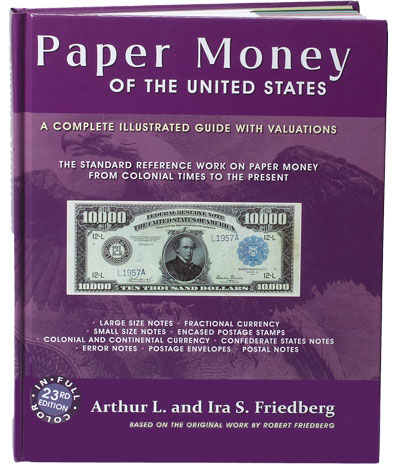
Like the Red Book, it’s a comprehensive illustrated guide. And it’s a must for every collector of American paper money.
This book covers everything from Colonial and Continental currency to modern Federal Reserve notes. Including Silver Certificates, Treasury Notes, National Bank Notes and more.
It even has sections on Confederate currency and encased postage stamps.
Paper money collecting – known as notaphily – has its own terminology, grading standards and historical context. So a dedicated reference will help you navigate this fascinating field with confidence.
And just as with coin books, you can find specialized guides for paper money, too.
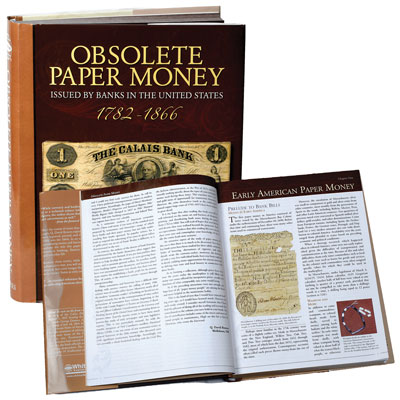
One of my personal favorites is Obsolete Paper Money by Q. David Bowers. And I especially love 100 Greatest American Currency Notes – which Bowers co-authored with Littleton Chairman David Sundman.
It’s a beautiful book with stunning photographs and fascinating facts about some of the most important and prized U.S. currency notes ever issued.
Coin Albums and Folder Books
Of course, the term “coin book” doesn’t always mean books meant for reading.
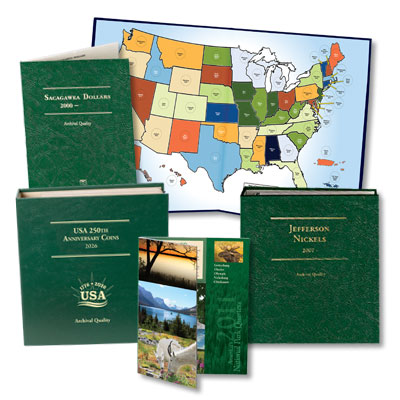
It’s also used for folders and albums you can use to store, protect and display your collection. And for many, they’re perhaps the most rewarding coin books on their shelves. Because they transform collecting into a visual journey.
Each slot represents a date or mint mark, giving you a clear goal and a sense of progress as your collection grows. And a tremendous sense of accomplishment when you fill that last spot.
Building a complete set in an album or folder can add structure and enjoyment to your hobby, turning a box of coins into a story you can flip through page by page.
Littleton offers some of the best coin and paper money albums and folders available. They’re affordably priced, and designed by collectors for collectors. And each one is proudly made in the U.S.A. using safe, archival-quality materials.
You can check out their full line in the Supplies section of their online store.
Price Guides and Reference Books as Collectibles
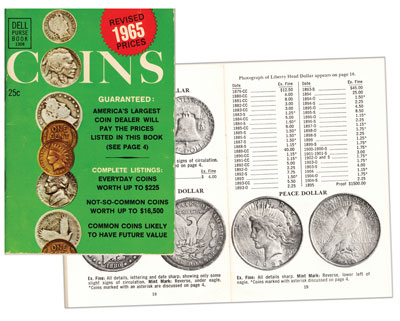
Here’s something newer collectors often discover with surprise: Some coin books are collectible in their own right.
Old price guides and early editions of the Red Book – especially those from the 1940s and 1950s, are highly sought after today. They offer snapshots of the hobby as it once was. Including pricing that feels almost unbelievable by modern standards.
Other reference works, such as vintage auction catalogs or out-of-print specialty guides, can also become prized pieces in a numismatic library.
A Collector’s Tip: Choose Quality Over Quantity
Keep in mind, not all books are created equal.
In recent years, collectors have noted a rise in low-quality or poorly researched publications, particularly from obscure authors with no credentials. Some of which are filled with AI-generated – and sometimes completely fabricated – text and images.
So when choosing coin books, I highly recommend sticking with trusted publishers and well-known experts.
A few reliable, authoritative books will serve you far better than a shelf full of questionable ones.
Building Your Own Coin Book Collection
So where should you start?
I’m personally an old-school bibliophile with bookshelves filled with treasured tomes. But the truth is you don’t need many books at all.
A well-rounded coin book collection might include:
- A current edition of the Red Book
- One or two specialized guides for your favorite series
- A paper money reference (if you collect currency notes)
- At least one coin album or folder for hands-on collecting
…and perhaps a few vintage or out-of-print books for historical interest
These should guide you well on your numismatic journey. And as you become more experienced, you can always opt to grow your library alongside your collection.
Because the truth is, coin collecting has always been as much about learning as it is about owning.
Every coin has a story…
Coin books are important references when building your collection.
They help you determine if a specimen is a good find, and a good buy. As well as identify which coins or notes are missing from your collection.
But they are also so much more.
One of my favorite things about this hobby is the history. Every coin and note has a story. A good book can help you discover it.
And that’s important. Because as you build your coin book collection, you’re not just gathering references. You’re building a foundation of knowledge that will shape your entire collecting journey.
Years from now, you might even find those books just as meaningful to you as the coins and notes themselves.
Until next time,
Happy Collecting!
Sources
“Coin Collecting Books.” Littleton Coin Company. Accessed April 24, 2026. https://www.littletoncoin.com/shop/coin-collecting-books
Yeoman, R.S. A Guide Book of United States Coins 2026. Florence, AL: Whitman Publishing. 2025
Friedberg, Arthur L, and Ira S Friedberg. Paper money of the United States: A complete illustrated guide with valuations: The standard reference work on paper money from colonial times to the present. Williston, VT: Coin & Currency Institute, 2024.
Bowers, Q. David. Obsolete Paper Money Issued by Banks in the United States 1782-1866: A Study and Appreciation for the Numismatist and Historian. Florence, AL: Whitman Publishing. 2006.
Bowers, Q. David and David M. Sundman. 100 Greatest American Currency Notes. Atlanta, GA: Whitman Publishing. 2005.
Bowers, Q. David. A Guide Book of Morgan Silver Dollars. Florence, AL: Whitman Publishing. 2024
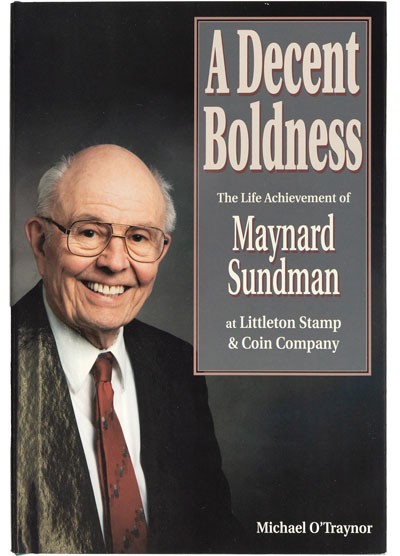
O’Traynor, Michael. A Decent Boldness: The Life Achievement of Maynard Sundman at Littleton Stamp & Coin Company. Littleton, NH: Littleton Coin Press. 1995.


I agree that having a collection of such books is good to have. I have a few of these myself. Although I do not have a collection of all the types of coins or paper money books but when I do come across something that might be one worth saving I will have a good reference to check with.
Hi Ricky, Having even a few good reference books on hand can make a big difference, especially when you come across something that might be worth keeping. It’s great that you’re building a collection that works for you—those resources really help collectors make more informed decisions. Thanks for stopping by!