
Independence days aren’t just for the USA
July 4, 1776. When the founding fathers declared independence 250 years ago, they couldn’t have imagined what the 4th of July would come to mean to the American people. All they knew was that in order to form a union united in liberty and justice for all, the thirteen colonies needed to come together and fight Great Britain head on.
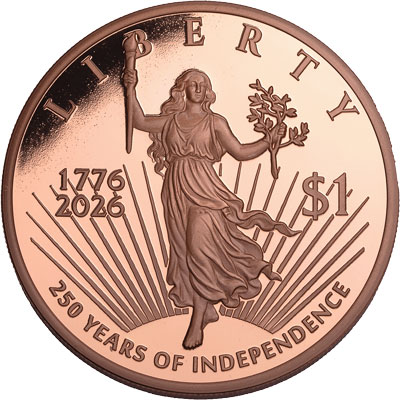
The war for independence lasted seven long years. Yet General George Washington, his soldiers and the Continental Army’s allies persisted. Finally, the colonists emerged victorious at the Battle of Yorktown, a little more than six years after the Declaration of Independence had been signed. And in September 1783, Great Britain officially accepted that the colonies were now their own nation – the United States of America.
Today, the U.S. celebrates Independence Day with parades, barbecues and fireworks. We really know how to throw a great birthday party for Lady Liberty! But it isn’t just Americans that can claim freedom from the British. Did you know that 65 countries have gained independence from Great Britain? So, in honor of those nations, today we’re taking a look at independence days around the world.
O Canada
It’s nearly impossible to talk about independence days without looking at our neighbor to the North. Best known for its vast wilderness, welcoming citizens and beloved maple leaf, Canada has a rich history.
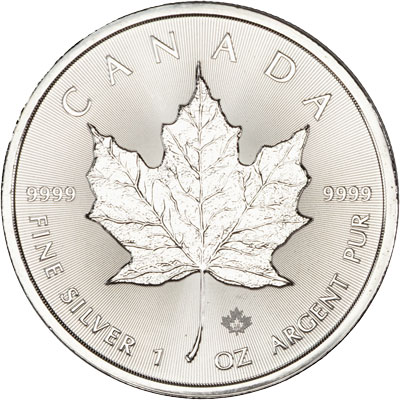
In 1763, following the end of the French and Indian War, Great Britain gained control of France’s Canadian territories. Known as British North America, the area was split up into: Upper Canada (today this is Ontario) and Lower Canada (the southern area of Quebec as well as portions of Newfoundland and Labrador) plus parts of Prince Edward Island and British Columbia.
In the decades that followed, legislature was passed in an attempt to help ease growing tensions. Most notably the Constitutional Act of 1791, which gave the people of Upper and Lower Canada the ability to choose representatives to speak on their behalf. However, these bills had the opposite effect and instead fanned the flames of resentment.
Finally, in 1837, rebellion broke out and the British had to divide their attention between the Canadian colonies. The uprising in Upper Canada was led by Scottish-born politician William Lyon Mackenzie, who opposed the way officials and businessmen ran the colony. While Louis-Joseph Papineau headed the Patriotes in Lower Canada against the British governor and his (unelected) counsellors. While neither rebellion had the same success as the American Revolution, they did help establish a more united government for the Canadian people.
Thirty years after the uprisings, the British North American Act was passed and the Dominion of Canada was created. Although it wouldn’t be until 1982 that the country would enact its own constitution.
Originally called “Dominion Day” in honor of the day the British North American Act was passed, today Canadians celebrate July 1 as the nation’s Independence Day. While this year’s Canada Day may have already passed, it’s not too late to celebrate the wild beauty of this country.
Tryst with Destiny
India was ruled by Britain in one way or another for almost two hundred years. Great Britain’s first foray into the country saw them arriving as merchants from the British East India Company. Initially ruled by the Mughals, the dynasty’s decline in the 18th century left a power vacuum the British East India Company quickly filled.
But by the middle of the 19th century, control had shifted once again. Following the Sepoy Rebellion of 1857, power was placed in the hands of Queen Victoria. This brought India into the age of the British Raj. And while parts of the country’s infrastructure were revolutionized, Indian citizens struggled with the speed of these changes and the knowledge that, ultimately, the British would profit from them.
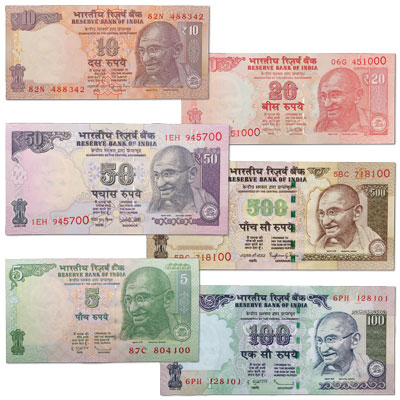
As the world entered the early 20th century, the desire for an independent India gained momentum. Leading the movement were leaders like Jawaharlal Nehru, Anjana Devi Chaudhary and – of course – Mohandas “Mahatma” Gandhi.
A staunch believer in the power of peaceful protests, Gandhi spent his life advocating for his country’s freedom. While he led multiple demonstrations, one of the most impactful was the Dandi (or Salt) March that took place in 1930. Crossing more than 230 miles, Gandhi and his followers stopped at different villages each day to speak about their cause. By the time he reached the Arabian Sea, tens of thousands of people walked alongside him.
The idea of India, an independent nation in its own right, continued to spread throughout the country. At last, on August 15, 1947, after decades of fighting, India was free from Great Britain.
May the Road Rise to Meet You
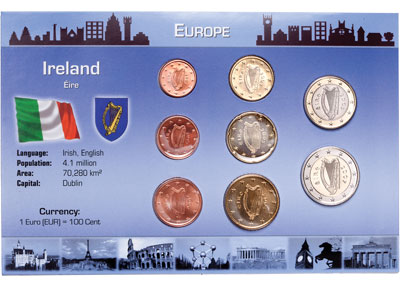
The Republic of Ireland’s journey to independence from Great Britain is a long one, going back centuries. Without going into all the backstory, we’ll start in the midst of World War I. While the world was divided into the Allies vs Central Powers, Ireland was at odds with the British crown.
Tired of being unable to govern themselves, the Irish Republican Brotherhood (IRB) stepped in. Formed in the mid 1800s, the IRB initially acted as a secret organization seeking independence for Ireland. But with World War I causing unprecedented chaos, the IRB took this as an opportunity to act.
On Monday April 24, 1916 – Easter Monday – mayhem broke out in Dublin. Roughly 1,200 Irishmen and women worked together to seize control of various locations throughout the city. Called Easter Rising, the event worked its way through the country for a week before the British were able to regain control. But by then, the seeds of discontent had been sewn.
As the British arrested prominent members of the movement over the next several years, public outrage grew. In response, the group Sinn Féin created Dáil Éireann, the “Assembly of Ireland.” The first parliamentary meeting took place in January 1919 where members of the Dáil read from a Constitution and Declaration of Independence – although it would be several more years before the British conceded.
Finally, on December 6, 1922, the Irish Free State was formed as Great Britain agreed to the independence of 26 of Ireland’s 32 counties. Today, these states are known as Éire or the Republic of Ireland.
Lands of the Free
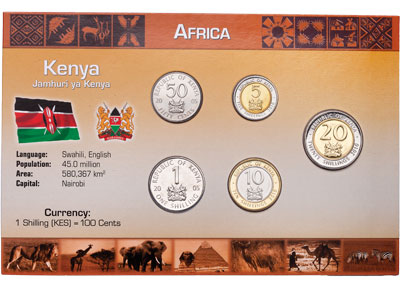
As the 20th century took hold, so did independence around the world. From places like Jamaica, the Caribbean’s ever popular island nation, to the nation of Kenya in East Africa all the way to the shores of Singapore, there are so many different independence days to celebrate!
Whatever independence day(s) you choose to celebrate, we hope you have a great one! What are some of your favorite traditions around Independence Day? Do you have any coins or paper money in your collection honoring these countries? I’d love to know!
Sources:
Government of Canada. “The history of Canada Day.” Accessed March 11, 2026. https://www.canada.ca/en/canadian-heritage/campaigns/canada-day/about.html
Government of Canada. “Discover Canada – Canada’s History.” Accessed March 11, 2026. https://www.canada.ca/en/immigration-refugees-citizenship/corporate/publications-manuals/discover-canada/read-online/canadas-history.html
Ungvarsky, Janine. “Fathers of Confederation.” Accessed March 17, 2026. https://www.ebsco.com/research-starters/history/fathers-confederation
Petersen, Nis. “India Gains Independence from the United Kingdom.” Accessed March 18, 2026. https://www.ebsco.com/research-starters/history/india-gains-independence-united-kingdom
National Geographic. “India’s Independence.” Accessed March 18, 2026. https://education.nationalgeographic.org/resource/indias-independence
Blakemore, Erin. “How Mahatma Gandhi changed political protest.” Accessed March 18, 2026. https://www.nationalgeographic.com/culture/article/mahatma-gandhi-changed-political-protest
Stamp, Gavin. “Neighbours across the sea: A brief history of Anglo-Irish relations.” Accessed March 20, 2026. https://www.bbc.com/news/uk-politics-26883211
National Army Museum. “Irish War of Independence.” Accessed March 30, 2026. https://www.nam.ac.uk/explore/irish-war-independence
National Army Museum. “Easter Rising.” Accessed March 31, 2026. https://www.nam.ac.uk/explore/easter-rising

