
Leaving a Mint Mark
Degrading coins was a serious business crime in Ancient Lydia’s trade hub of Philadelphia. Regarded as treason, debasing the metal or issuing underweight coins often resulted in the punishment of death.
How were the culprits identified? By the coins’ mint marks!
Time travel now to the new commercial hub of Philadelphia in the new United States of America. With just 15 sparsely settled states in 1792, only one mint was needed in what was then the capital. When the first coinage act was passed that year, there was no requirement for a mint mark. But there was a provision for the death penalty if coins were found to have been compromised.
The No Mint Mark Myth
Folks new to coin collecting frequently think no mint mark on a coin means it’s rare. It is not. It just means the coin was struck in Philadelphia. This mint went quite a while without the initial “P” to identify the origin of any of its coins.
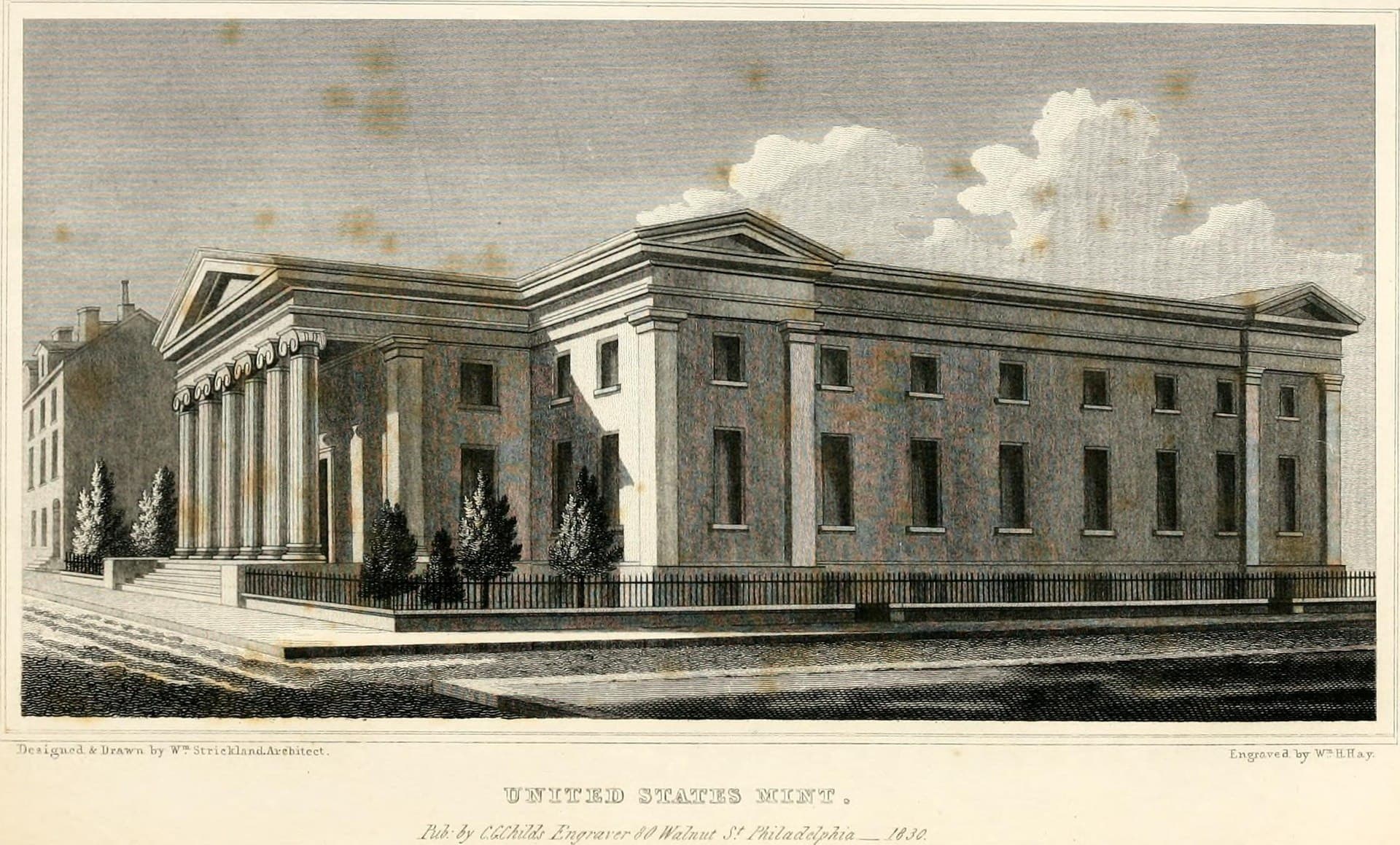
Then came the discovery of gold in the southern states and silver in the West, plus population growth. Built on a colonial-era whiskey distillery, the “mother mint” was going to need a larger production facility. There quickly followed the need for regional mints to keep up with the country’s economic expansion.
Passage of the Congressional Act of 1835 mandated the use of mint marks to establish origin, authenticity and quality of the non-Philadelphia coins. Carried over from the original 1792 legislation was a provision for the death penalty if any mint official were found guilty of debasing U.S. Mint-issued coins, whether by less weight or precious metal value.
The first initialed strikes occurred in 1838 at three regional facilities: Charlotte (“C”), Dahlonega (“D”) and New Orleans (“O”). Mints in San Francisco (“S”) and Carson City (“CC”) eventually opened, and their mint marks became part of what collectors looked for.
When Dahlonega closed in 1861 and Denver opened in 1906, the latter’s mint mark was obvious. West Point’s inaugural use of its “W” mint mark occurred in 1984. But coins issued by the nation’s first mint retained their anonymity.
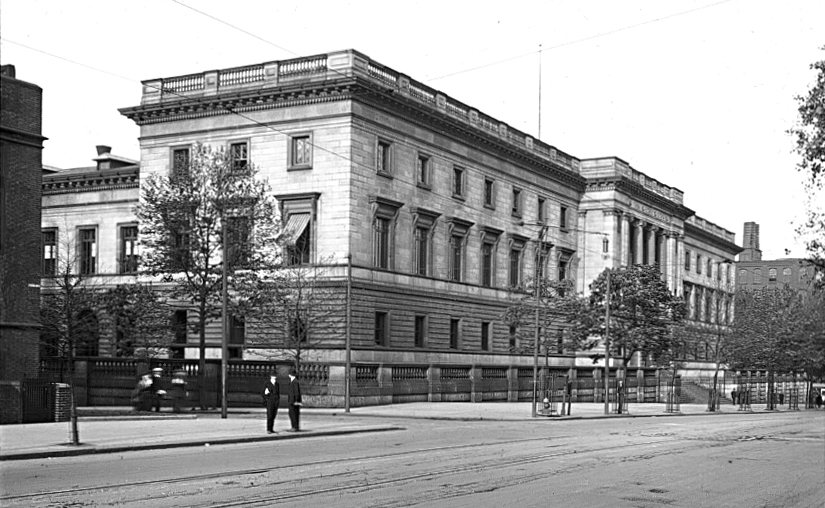
By the time World War I broke out in Europe, all but the San Francisco and Denver branch mints had closed. Meanwhile, Philadelphia had opened its third building in 1901. Considered the largest coin production facility in the world at the time, the Beaux Arts edifice occupied nearly an entire city block.
In one year alone, it issued 501 million U.S. coins, or 5/7 of all the currency minted in America, according to Workshop of the World-Philadelphia. In addition, 90 million coins for foreign countries were struck at this location.
Then came World War II.
Tails Not Heads
In 1941, America entered the global battle against the Axis powers, which triggered this war in the Pacific as well as Europe. A decision was made to deploy the performance-enhancing nickel metal in munitions. To help maintain the five-cent coin’s legal weight, especially for use by consumers in vending machines, 35% silver was combined with 56% copper and 9% manganese.
Then, to differentiate these coins, the U.S. Mint used oversized mint marks placed on the tails, or reverse, above the Monticello dome – from all three mints, including a P mint mark for Philadelphia! Its appearance was short-lived, though.
Following victory in 1946, nickel replaced both the silver and manganese as the alloy bonded with copper. More modest mint marks returned to their original reverse positions except for those issued in the City of Brotherly Love. Once, again, these coins resumed anonymity.
But in 1965, all mint marks were removed from all circulating coins. Faced with rising silver prices, the U.S. Mint cast around for an affordable solution. At the same time, shoppers were starting to hoard dimes, quarters and half dollars – all with silver content – leading to a severe shortage of circulating coins.
Through 1967, traditional coin collectors found it challenging to build accurate Mint Sets without knowing the coins’ origins. Eventually, the federal Treasury and Mint resolved the metal composition, and mint marks resumed on all but those coins struck in Philadelphia.
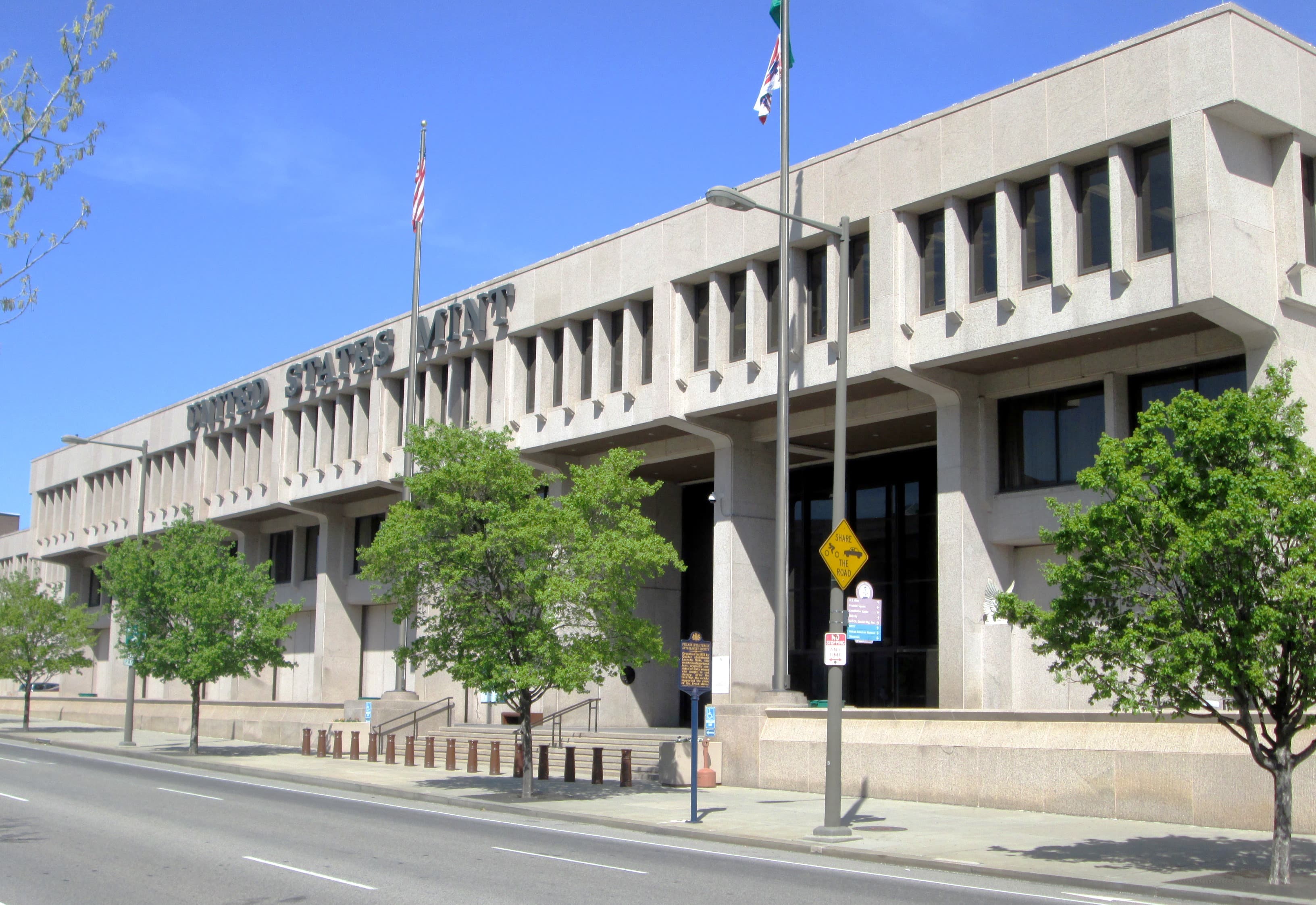
Even a new, massive and modern facility with much-needed state-of-the-art coining machines didn’t result in the P mint mark reappearing. Philadelphia’s fourth mint designed in the Brutalist architectural style opened August 14, 1969 on Independence Mall.
The Start of P&D Collecting
Around this same time, another decision was made to make the obverse the standard location of all mint marks going forward…until the 2007 introduction of the Presidential dollar coins with their mint marks incused.
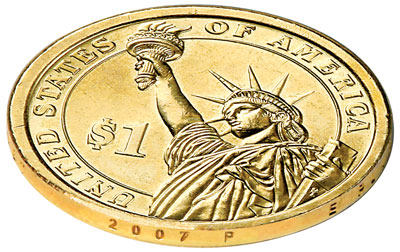
Mint marks on all obverses? Yes! But I’m getting ahead of myself – the mother mint’s historic anonymity was about to end.
Both U.S. Secretary of the Treasury William E. Simon (under Presidents Richard Nixon and Gerald R. Ford) and his successor, W. Michael Blumenthal (under President Jimmy Carter), favored inclusion of the P mint mark on the Susan B. Anthony dollar to clarify production origins, according to CoinWeek. It was during Blumenthal’s tenure that the “P” finally made it onto the heads, or obverse.
It arrived in 1979 and next to the profile of the famous suffragist on America’s first small-size dollar. Designed to be larger than a quarter, but smaller than a half dollar, the Anthony coin replaced the even larger and heavier Eisenhower dollar.
Starting in 1980, all coins – nickel, dime, quarter, half dollar, dollar – issued by the main mint carried the P mint mark. It also signaled the launch of the P&D tradition of coin collecting by mint marks. Using this introductory standard, collectors learn to compare quality, track design changes, and build a comprehensive collection of legal-tender coins.
Except for the ubiquitous cent.
Your “P” Mint Mark Checklist
The one-year-only P mint mark on the cent was struck to honor the Philadelphia Mint’s 225th anniversary in 2017. But now, with the discontinuation of the cent at the end of 2025, look only for the “P” on commemorative pennies going forward.
Here’s a simplified check list of “P” mint-marked coins as a handy reference:
- 1942-1946 – Jefferson wartime nickels struck in 35% silver; “P” located on reverse and above Monticello’s dome
- 1979-1981 & 1999 – Susan B. Anthony dollar; “P” on obverse over her right shoulder
- 1980 to date – Roosevelt dime: “P” on obverse just under his neckline and above the year*
- 1980 to 2003 – Jefferson nickel; “P” on obverse, right of his ponytail
- 1980 to date – Washington quarter; “P” on obverse, right of his hair ribbon
- 1980-date – Kennedy half dollar; “P” on obverse, under neckline
- 1995 – Civil War Battlefields Commemorative Dollar
- 2000-2008 – Sacagawea dollar; “P” on the obverse just below the date
- 2005 – Jefferson nickel, the P on obverse below the word liberty
- 2006-date – Jefferson nickel, “P” on obverse below year
- 2009 to date – Native American dollar; “P” near coin’s edge, just after the date.
- 2017 – Lincoln cent one year only, in honor of U.S. Mint’s 225th anniversary
- 2018-date – American Innovation dollar
- 2026 – dual-dated SemiQ coins
*1982 Variety – An estimated 150,000 “No P” Roosevelt dimes escaped the Philadelphia Mint, making it the first modern circulating coin since 1980 with this error.
As always, happy collecting!
SOURCES
Deisher, Beth. “Budget cuts at U.S. Mint hit collectors in early 1980s.” CoinWorld. March 6, 2015. https://www.coinworld.com/news/us-coins/budget-cuts-at-us-mint-hit-collectors-in-early-1980s.html#:~:text=But%20Mint%20managers%20identified%20the,Uncirculated%20Mint%20sets%20in%201984
“Greek Coinage.” American Numismatic Association. Accessed December 19, 2025. https://www.money.org/money-museum/virtual-exhibits-hom-case2/
“P mintmarks added after long absence.” Numismatic News. October 23, 2022. https://www.numismaticnews.net/collecting-101/p-mintmarks-added-long-after-absence
“Third Philadelphia Mint.” Workshop of the World. Accessed December 19, 2025. https://www.workshopoftheworld.com/center_city/mint.html#:~:text=The%20third%20Philadelphia%20Mint%20was%20built%20in,Sellers%20Company%20and%20other%20area%20machine%20shops

