
STEM-ing out with coins
When you think of STEM, you probably think of the movement that’s been gaining traction over the last few decades. But this isn’t really a new initiative.
Did you know that the precursor to the STEM movement goes back to the Civil War? Authorized by President Lincoln, the Morrill Act of 1862 was created to expand education. Previously, secondary school was limited to the students wealthy enough to afford it. The Morrill Act gave everyone the opportunity to further their education by focusing on engineering, the mechanical arts and agricultural studies.
Today, children of all ages are encouraged to participate in classes designed to promote interest in STEM.
National STEM Day is celebrated annually on November 8. With so many ways to celebrate this important topic, it can sometimes be hard to know where to start. So, what have coins got to do with STEM? Believe it or not, quite a lot! Whether you’re a teacher, student or just looking to get in on the fun, there’s plenty of STEM coins to choose from and enjoy in your collection.
S…cience
You may remember this particular scientist from a recent blog post we did back in August. But I’d be doing a disservice to Dr. Vera Rubin – a woman who led the way for female scientists – if I didn’t at least mention her.
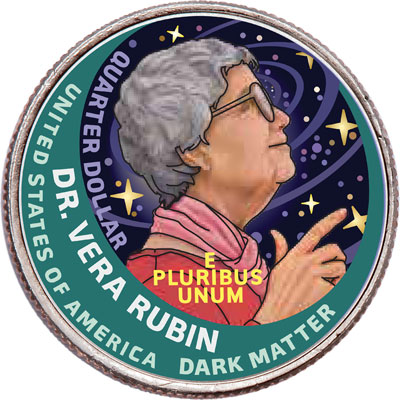
Working to become an astronomer, Dr. Rubin broke out onto the scene in 1948. Eager to begin her career, she faced the boy’s club that was astronomy with a smile and refusal to give up. Over the course of her career, Dr. Rubin would not only discover dark matter but also break gender barriers (she became the first woman to use the 5-m telescope at Palomar Mountain Observatory!) all while mentoring young women interested in science.
Of course, I can’t leave out one of our country’s original scientists – and founding fathers to boot! – with America’s 250th birthday around the corner. Known for his ties to the city of Brotherly Love, Benjamin Franklin was one of the greatest minds of his time.
Ask any school aged kid about Mr. Franklin’s best-known experiment and the response you’ll get 99% of the time? Flying a kite during a thunderstorm to conduct electricity. But his list of scientific accomplishments is just a smidge longer. From designing swim fins to determining that lead exposure caused illness and charting the Gulf Stream (and so much more), Franklin dabbled in a bit of everything.
T…echnology
Here in the 21st century, technology is something we’re lucky enough to hold in the palm of our hands (literally). It wasn’t always this way though! Breakthroughs in the 19th and 20th centuries made that possible in leaps and bounds. Just take a look at these STEM coins that honor pioneers Samuel F.B. Morse, Henry Ford and Dr. Bernard Lown.
Starting us off is the implementation of the Tennessee Valley Authority (TVA). Brought to life by President Roosevelt’s New Deal, the TVA was responsible for bringing two vital necessities to rural America: protecting farms from flood damage while also bringing electricity to the millions of people living without it. But that wasn’t all – thanks to the TVA, an experimental rural electric co-op was set up… and it was a success! The government acted quickly to implement a new agency dedicated to this program.
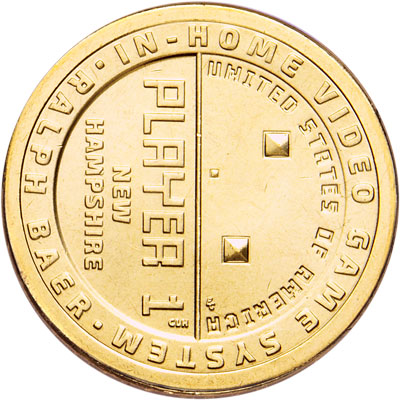
Technology really has become a large part of our leisure time as well! For many, video games are a great way to destress after a long day. And if you’re one of those people who enjoy them, you can thank Ralph Baer and his work. Baer’s design for the first-ever multiplayer, multi-program video game system revolutionized the gaming world. Known as “The Brown Box,” this system led the way for a new era of relaxation.
If you’re looking for more coins with a history of transforming technology, I’d recommend the U.S. Innovation dollars. Issued for the first time in 2018, this dollar series will release four coins every year until 2032 honoring different inventors or inventions from each of the fifty states and U.S. territories.
E…ngineering
Responsible for creating the infrastructure behind the technology that improves our lives, engineers play an important role in STEM. From designing machines to building infrastructure and providing maintenance on those systems, without engineers those technological breakthroughs wouldn’t be possible!
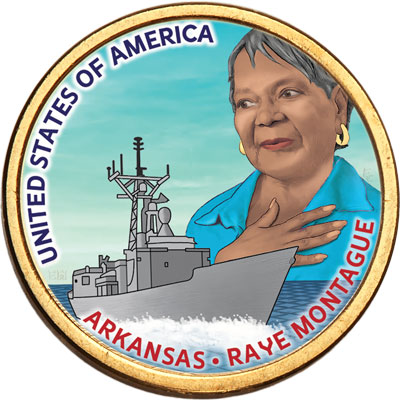
Let me introduce you to Raye Montague. As the U.S. Navy’s first female engineer, Raye not only shattered gender barriers but also accomplished something that had never been done before. Challenged to design a ship in just one month, she would need to turn to her computer. What would have taken years to design on paper, took Raye less than 19 hours on the computer. Over the course of her career, she would continue to design ships as well as teach incoming naval engineers.
The U.S. Navy isn’t the only government agency to employ engineers though.
While NASA has locations across the country, perhaps its most famous site is the Johnson Space Center (aka Mission Control Center) in Houston, Texas. And while there are lots of engineers that work for the space agency, the four main groups are: mechanical, electrical, civil and chemical. After you break each group down, the different types of engineers expands exponentially.
Without the work of aeronautical, robotic and all sorts of engineers in between, the Saturn V rocket and space shuttle program would never have taken flight!
M…athematics
Math has inspired mankind since the days of Ancient Greece. From Archimedes to Stephen Hawking, great minds have worked to unravel the mysteries of the mathematical world. And while we’ve gotten closer, there’s still so much left to discover.
Take the Gerber Variable Scale for instance. Invented by Joseph Gerber in the late 1940s, this scale transformed the way that objects were measured. As a junior in college, Gerber had changed the way that scaling was handled. Instead of using precise measurements, Gerber’s invention meant that things could be measured on a smaller scale before being converted to their actual dimensions.
And then of course, there’s everyone’s favorite professor…
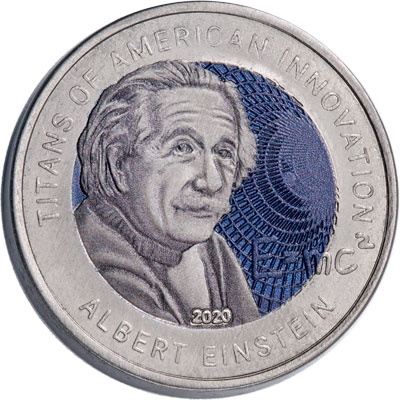
While Albert Einstein isn’t necessarily considered a mathematician, he did have a lot to contribute to subjects like calculus and geometry. A theoretical physicist, Professor Einstein developed trailblazing theories – all of which relied on intricate mathematical formulas. Some of his biggest mathematical contributions came in the form of the Einstein field equations.
Basically, Einstein’s equations boil down to the way that matter bends the space around it. Groundbreaking in the way that gravity and the universe were understood, today his equations are still being worked on to unravel the mysteries of the universe!
S-T-E-M spells STEM
I hope you’ve found some coins to share with the student or teacher in your life! One of my personal favorite series’ that we have is the Titans of American Innovation. While this 12-coin set covers some of the scientists and engineers we’ve talked about today, it also looks at others like Nikola Tesla and Charles Goodyear. All of whom had curiosity – and lots of it – to change the landscape of the world around them.
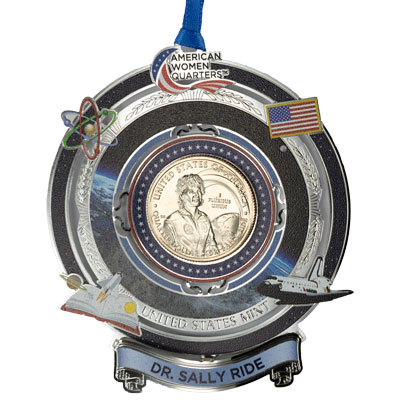
In the words of astronaut Sally Ride, “Science is fun. Science is curiosity. We all have a natural curiosity. Science is a process of investigating. It’s posing questions and coming up with a method. It’s delving in.”
So, think outside the Bunsen burner and tell me… who or what would you like to see honored on a coin? Which of these STEM coins is your favorite? And until next time, I’ll leave you with this joke:
What type of dog do chemists own? A Laboratory Retriever!
Sources:
Laquea, Kaley. “What Is STEM Education?” Accessed August 22, 2025. https://ace.edu/blog/what-is-stem-education
Berkopes, Kevin. “150 Years of Requesting STEM Integration in Education.” Accessed August 22, 2025. https://mathtrack.co/blog/150-years-of-requesting-stem-integration-in-education
NASA STEM Team. “What Type of Engineering is Right for You?” Accessed August 25, 2025. https://www.nasa.gov/learning-resources/what-type-of-engineering-is-right-for-you/

