
These 10 Influencers May Surprise You
Today’s influencers aren’t the first to affect the opinions and actions of others. I was surprised to trace their professional ancestry to colonists who persuaded the public that an independent America meant economic and political freedom.
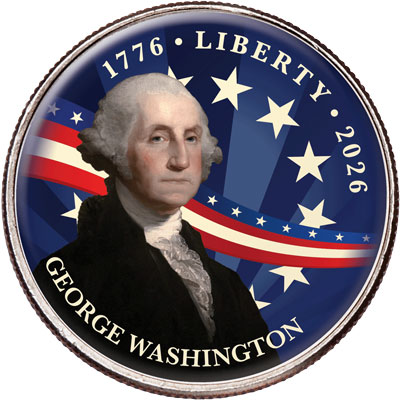
Also known as the U.S. Founding Fathers, ten colonial influencers are honored on colorized Kennedy half dollars in a special set from Littleton Coin for the USA’s 250th anniversary. To be released throughout 2026, the coins fit in a custom-designed trifold display folder. We’ve illustrated it with a timeline, brief biographies and fascinating quotes that capture the American Revolution’s early rumblings up to the first presidential address delivered by George Washington. Come meet them.
Age of Protest
The revolution started as a protest movement against new taxes just two years after colonists successfully joined forces with Indigenous People to help the British expand their territories in North America. The grueling nine-year war to push out the French lasted from 1754 to 1763.
But Parliament imposed taxes on their colonies to pay down the war debt and pay for soldiers needed to protect a considerable amount of terrain: French-speaking Canada, the 981-mile-long Ohio River Valley, land east of the Mississippi River, plus Florida that was given to the British crown by Spain.
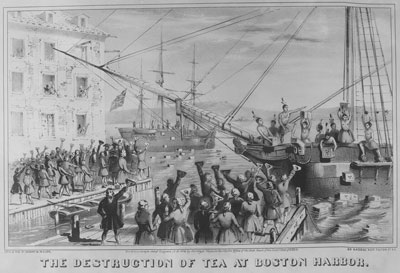
Sam Adams was the third generation of his family born in the Massachusetts Bay Colony; John Hancock III, the fourth. Both men were part of Boston’s merchant class. Both were part of the political activists who founded the Sons of Liberty and staged the Boston Tea Party, among other early forms of public protest. They are the two earliest U.S. Founding Fathers in our series.
Age of Enlightenment
Monarchs ruled the Old World by claiming their power was given by God. But as more commoners received an education, the ideals of ancient Greece and Rome focusing on reason and self-determination took on a newfound appeal. The resulting Age of Enlightenment questioned so-called divine authority. It emphasized logic and scientific experimentation. And, it led to new thinking about government, human rights and individual liberty.
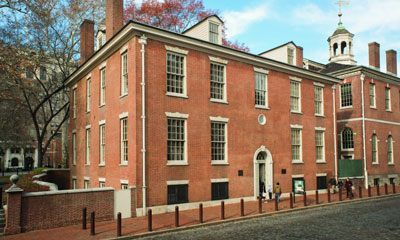
This influential era lasted 130 years, from 1685 to 1815. Into it both Benjamin Franklin and Thomas Paine were born, and they flourished. In 1743, Franklin founded the American Philosophical Society in Philadelphia for the purpose of “promoting useful knowledge.” It’s still in existence today.
Then, in 1772, Franklin – representing the British provinces of Pennsylvania, Massachusetts, Georgia and New Jersey – was in London, fighting for the rights of the American colonists to not be taxed.
Also petitioning Parliament at that time was Thomas Paine. His goal was two-fold: better labor conditions and higher salaries for the empire’s working class. In Paine, Franklin found a like-minded thinker and together they would be regarded as U.S. Founding Fathers.
At his urging, Paine relocated to Philadelphia and began pamphleteering. In January of 1776, Common Sense, his most quoted – and influential circular – was published. But Paine wasn’t the only immigrant to write handbills championing independence from hereditary privilege and for a representational government.
Age of Publius
In 1772, a teenage Alexander Hamilton left his native Nevis, part of the British Leeward Islands in the Caribbean Sea, to spend a year living with lawyer and outspoken supporter of American independence William Livingston. At Kings College (today’s Columbia University) in New York City, Hamilton was a prolific pamphleteer, arguing for a revolution.
Soon enough, the War for Independence interrupted his education. Hamilton drilled with a militia, became caption of an artillery company, and rose to be General George Washington’s aide-de-camp, witnessing success at the decisive Battle of Yorktown in Virginia.
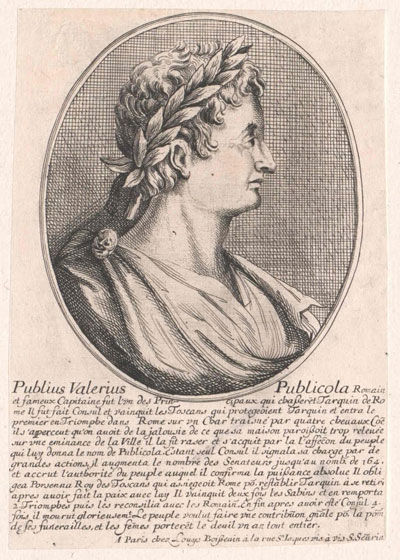
But it was his shared role as the influencer known as Publius that secured his fame in getting the U.S. Constitution ratified. The pseudonym honored statesman Publius Valerius Poplicola, who helped found the Roman Republic. Hamilton enlisted fellow revolutionaries and lawyers John Jay, who was the second generation of his French Huguenot family born in America, and James Madison, third generation of his family born in Virginia, to help convince the colonists to ratify their new governing charter. These three swelled the ranks of the U.S. Founding Fathers.
Inaugural Age of U.S. Presidents
On April 30, at Federal Hall on Wall Street in lower Manhattan’s Financial District, farmer, retired general, and from the fourth generation in his family born in Virginia, George Washington took the oath of office as president of the world’s newest country.

In attendance was his vice president, John Adams, also from the fourth generation in his family born in colonial Massachusetts. This Adams, first cousin to the rabble-rousing Sam Adams, would become our nation’s second president. Also present was James Madison, our eventual fourth president, who had helped write the Constitution and later drafted the Bill of Rights while Washington was president.
The third president of the new United States, Thomas Jefferson, a lawyer from the third generation of Jeffersons born in Virginia, was abroad as the U.S. Minister to France at the time of Washington’s inauguration. He would soon resign that position to become the new nation’s first U.S. Secretary of State.
Together, these four men round out the 10 U.S. Founding Fathers we’re honoring in an exclusive colorized coin series for the USA’s 250th anniversary that comes with a custom coin folder.
SOURCES:
American Philosophical Society. Accessed October 31, 2025. https://www.amphilsoc.org/
Benjamin Franklin Historical Society. “Agent to London.” Accessed November 3, 2025. http://www.benjamin-franklin-history.org/agent-london/
Goodwin, George. “Benjamin Franklin in London.” George Washington’s Mount Vernon. Accessed November 4, 2025. https://www.mountvernon.org/library/digitalhistory/digital-encyclopedia/article/benjamin-franklin-in-london
The Constitutional Walking Tour. “Thomas Paine – One of America’s Founding Fathers.” Accessed November 4, 2025. https://www.theconstitutional.com/blog/2020/02/25/thomas-paine-one-americas-founding-fathers

