Collecting the ‘other’ Independence coins
Before the 250th anniversary of the United States officially arrives in 2026, let’s look through the rearview mirror at coins struck for earlier Independence anniversaries.
The most famous celebration, because it was the first, was the Centennial of 1876. While smaller observations were held regionally, the months-long exposition held at Fairmount Park in Philadelphia allowed 19th-century America to show how far it had come as an industrialized nation on the world stage.
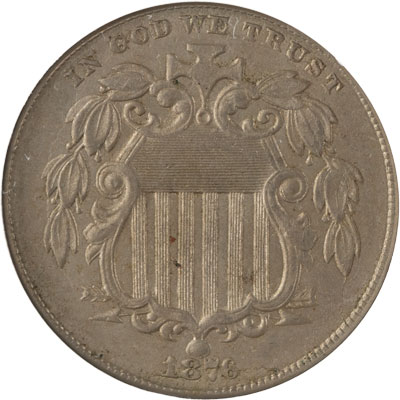
Among the coins struck 100 years after the signing of the Declaration of Independence was this limited mintage three-cent nickel – nickel referring to the base metal that would become important in World War II munitions. However, in 1876, the Philadelphia Mint also struck a more commonly recognized five-cent nickel. The United States was continuing to recover from the expensive Civil War that saw citizens hoard gold and silver coins. Also known by its reverse as a “shield nickel,” these five-cent pieces were still sorely needed in local commerce to make change 11 years after that war.
Speaking of precious metals, the San Francisco Mint struck silver trade dollars in 1876 as part of the larger U.S. strategy to increase its presence in Asian markets, especially those dotting the Pacific shipping routes. Authorized under the Coinage Act of 1873, these American coins competed against the far more established Mexican silver peso and Spanish silver peseta.
And gold coins, too, were struck in 1876. Take a look at this superb Liberty Head double eagle coin struck by the Philadelphia Mint during the centennial year.
Buy these Bicentennial coins
Heady stuff – coins minted during the 1876 centennial and still available! Now let’s move ahead another 100 years to 1976 and take a look at America’s Bicentennial coins. They remain as popular as ever, likely because nearly all of us have some memory of that super-charged Independence celebration. If you’re looking to build memory because you were born after 1976, here are a few numismatic suggestions.
You can never go wrong with a traditional year set in any coin collection. But this 1976 set from the San Francisco Mint recalls the historic tall ships sailing into New York’s harbor as the centerpiece of the Bicentennial celebration; U.S. athletes who won medals at the XXI Olympics in Montreal, and the Viking 1 Mars landing, among other notable achievements.
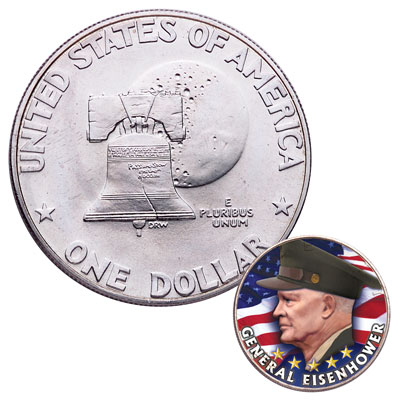
Few today link President Dwight D. Eisenhower’s awareness there was a growing national need for a civilian agency dedicated to space exploration. Two years before he retired from the Executive Office, Eisenhower created the National Aeronautics and Space Administration in 1958.
Three years later, the first manned crew, Apollo 11, landed on the Moon. The 1976 Eisenhower dollar reverse honors the president who laid the ground work for that historic mission. It’s included in this special set of silver clad Eisenhower dollars. The set comes with a free colorized dollar of our nation’s best-known five-star general.
John F. Kennedy followed Eisenhower into the White House. For the Bicentennial year, U.S. Mints struck three different Kennedy half dollars, including one in 40% silver from San Francisco. Each reverse featured Independence Hall, the cornerstone of American democracy. It was here that the Declaration of Independence and the U.S. Constitution were debated and signed.
Bicentennial ‘go-withs’
With a colonial drummer on a Washington quarter reverse, all three presidents’ coins were struck in 40% silver as a special 1976 commemorative set. Still in its original mint packaging, this affordable set of dual-dated coins makes a dandy addition to an Independence collection – or to give as a gift to a young collector.
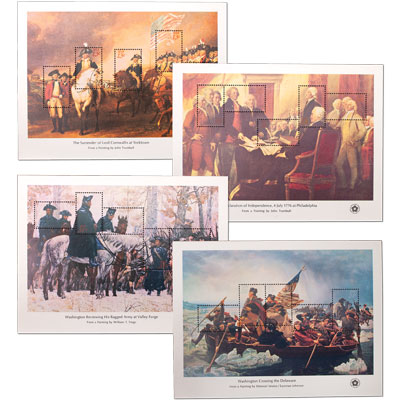
If you’re interested in adjacent collecting (colloquially referred to as go-withs) you might find your fancy tickled by these next two suggestions from 1976. The first is an impressive, and unused, stamp sheet set of four famous paintings depicting key events from the American Revolutionary War. The most famous is the draft of the Declaration of Independence being presented to the Continental Congress – in color!
We might better recognize that scene depicted in green on the backs of $2 Federal Reserve Notes. Take a look at this special 12 District Note set from 1976. It comes with a free $2 note with a postal stamp and First Day of Issue cancellation mark by the United States Postal Service.
More BYOI Collection Ideas
Littleton’s impressively large Independence Hall challenge coin pays tribute to the famous brick-clad building in Philadelphia. It’s anchored by a Franklin dollar reverse that depicts the Liberty Bell, famed as much for its symbolism as for the recurring crack that resulted from multiple incidents.
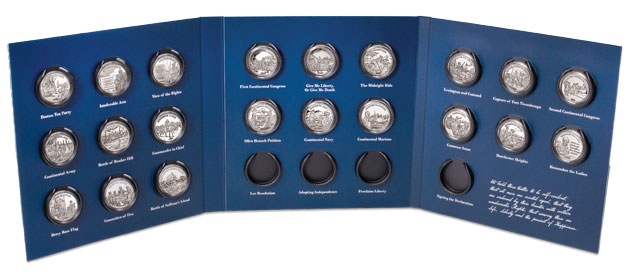
If you’re choosing to build your own Independence (BYOI) Collection for display or educational purposes (or just for fun!), consider this affordable challenge coin that honors the Continental Army’s 250th anniversary in 2025. A Continental soldier is also depicted on this silver half dollar issued in 1925 for the sesquicentennial of the Battle of Lexington and Concord.
Separately, it’s paired with another silver half dollar as part of a unique set honoring the 150th anniversary of the signing of the Declaration of Independence. This rarely seen silver half dollar profiles first president, George Washington, and the 30th president in 1926, Calvin Coolidge. His coinage appearance makes Coolidge the only living president to have been depicted on an American coin.
There’s also opportunity to join other collectors who are steadily building an America 250 collection of our Prooflike half dollars as they journey to July 4, 2026!