
10 Exciting Coin Errors for Your Collection
Coin errors have a way of turning an ordinary day into something special.
You reach into your pocket change or sort through a roll of coins from the bank… and suddenly one piece stands out. Maybe the design looks doubled, or a word is missing. Perhaps an odd mark appears where it doesn’t belong.
These little imperfections from the U.S. Mint’s production process create some of the most engaging finds in numismatics. They remind us that even with modern quality controls, a few coins still slip through with stories all their own.
Best of all, many of these coin errors are within the reach of even beginning collectors.
Some have turned up in circulation or bank rolls. Others appear in dealer stock at reasonable prices. You do not need a fortune or years of experience to start hunting. A good magnifier, decent lighting and a bit of patience are usually enough.
Here are ten exciting U.S. coin errors that deliver plenty of enjoyment whether you are just getting started or have been collecting for decades.
The Iconic 1955 Doubled Die Lincoln Cent
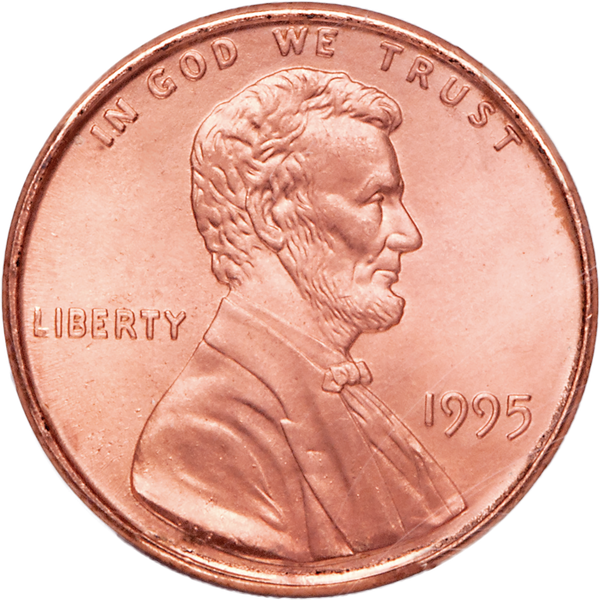
Few coin errors capture attention like the iconic 1955 Doubled Die Obverse Lincoln cent.
This legendary coin was created during the hubbing process at the Philadelphia Mint, when the die shifted slightly between impressions. The result is dramatic, strong doubling on the date, “liberty,” and “in god we trust” that even newcomers spot quickly with a loupe or magnifying glass.
Despite the mint’s strict quality controls, specimens escaped into circulation. And once they were noticed, they electrified the imagination of collectors and the public alike. Everyone wanted one!
Owning one feels like holding a slice of mid-20th-century mint history. And examples can occasionally still be found in circulation, so some collectors still search rolls or Wheat cent mixtures.
But if you want one today, Littleton currently has some great specimens available in their online store like the stunning Superb Gem MS-67 pictured here. Certified by NGC, it’s very sharply struck with few imperfections – and still boasts all its original red luster!
The Legendary 1937-D Three-Legged Buffalo Nickel
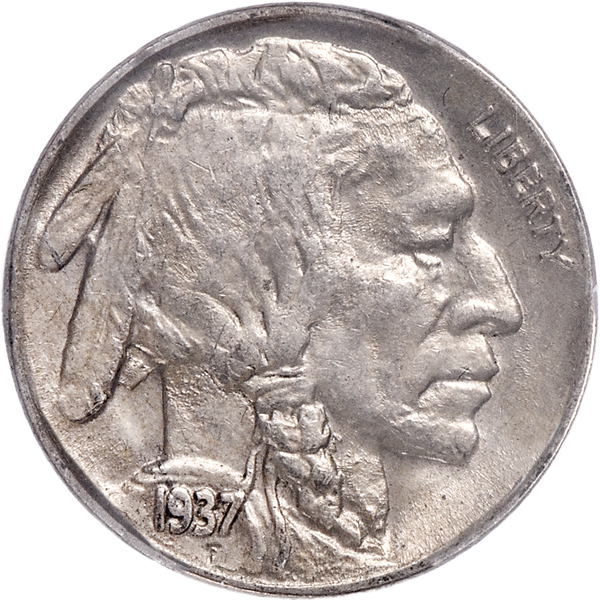
Next up is another iconic coin, this time from the Denver Mint.
The famous 1937-D Three-Legged Buffalo nickel also captured the public’s interest and imagination. And while scarce, it’s even more easily spotted than the 1955 Doubled Die Obverse Lincoln cent.
This time, the coin error was caused by a mint worker overly polishing the reverse die. Much of the right front leg of the bison wore away, leaving just a faint outline. The design still shows the Indian obverse and the overall Buffalo theme. But that missing leg makes the coin unmistakable.
The scarce and highly desirable 3-Legged 1937-D Buffalo nickel is considered a must-have for serious collectors of both Buffalo nickels and error coins. But most now rest in collections rather than pocket change.
Still, the story of a hardworking polisher going a step too far keeps it exciting for any collector who enjoys early 20th-century U.S. coinage.
Just beware of counterfeits. Due to the coin’s popularity and value, many non-error coins have been altered and passed off as legitimate errors. So if you want one for your collection, learn how to spot the fakes. NGC has a great guide for spotting counterfeits here.
And make sure to buy from a reputable dealer like Littleton Coin Company. They currently have several in stock, which have been expertly graded and come with a 45-Day Money Back Guarantee of Satisfaction.
The Whimsical 1955 “Bugs Bunny” Franklin Half Dollar
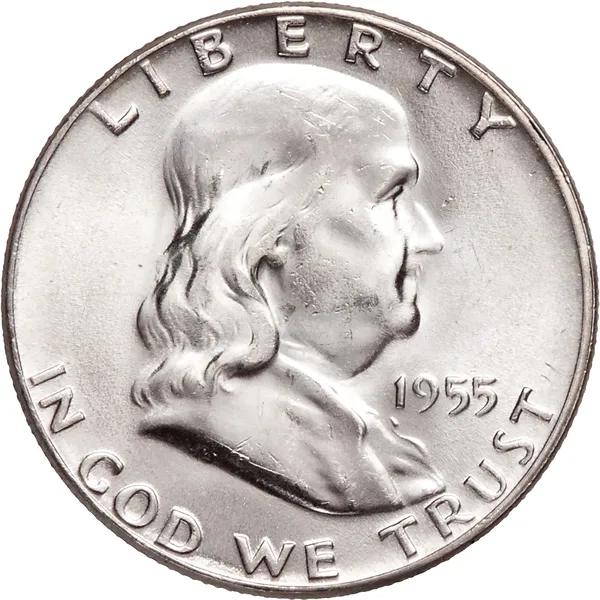
In 1955 the Philadelphia Mint produced Franklin half dollars that sometimes display a curious feature collectors have nicknamed the “Bugs Bunny” variety.
A clash between the obverse and reverse dies left raised marks near Benjamin Franklin’s mouth that look remarkably like buck teeth. The effect is lighthearted and easily recognized once you know what to look for.
Half dollars from that era already carry historical weight. But this playful error adds an extra layer of charm that beginners and longtime collectors alike appreciate.
The 2004-D Wisconsin Quarter with Extra Leaf
State quarters brought renewed interest in circulating coin errors, and the 2004-D Wisconsin quarter delivered one of the most discussed examples.
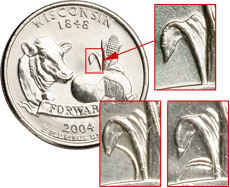
A die gouge created an extra leaf on the corn stalk beside the cheese wedge. Two slight variations exist, with the leaf in higher and lower positions. And both were struck at the Denver Mint.
Many turned up in circulation, often in rolls.
This one’s a favorite of mine, as it fits neatly into any collection of modern quarters and shows how a tiny mint mishap can create lasting collector appeal.
You can learn more about this and other Statehood Quarter error coins in Littleton’s free coin collecting Learn Center.
The 2000-P Sacagawea “Wounded Eagle” Dollar
Sacagawea coin errors offer some of the most visually striking finds of dollar coins in the new millennium. Including the rare 2000-P “Wounded Eagle” die error.
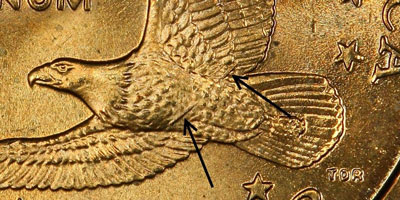
This error coin was caused by damage to the die at the Philadelphia Mint, which produced three raised lines across the eagle’s body and wing on the reverse. The lines are slightly curved, but straight enough so they almost look like arrows spearing through the eagle’s breast.
Fewer than 200 examples have been reported, making it a rare and exciting find. And the detail is easy to see under magnification. So it’s definitely worth a close examination of any 2000-P Sacagawea dollars in your collection!
The 2007 Sacagawea Dollar Edge Lettering Error
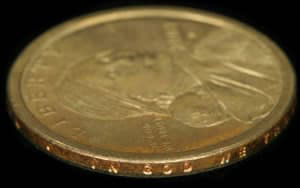
Another standout among Sacagawea coin errors appeared in 2007, when a single Sacagawea struck at the Denver Mint received edge lettering intended for the new Presidential dollar series.
Instead of being smooth, its edge bore the date, mint mark and mottoes e pluribus unum and in god we trust. The error highlights how the U.S. Mint’s transition to lettered-edge dollars opened the door to fascinating anomalies that collectors still enjoy hunting in mixed dollar rolls.
To date, just one of these exciting coin errors has been found and certified by PCGS… and it sold at auction in 2012 for a whopping $17,161.10 in 2021.
So check your change. There’s always a chance another is out there!
The “Godless” Presidential Dollars
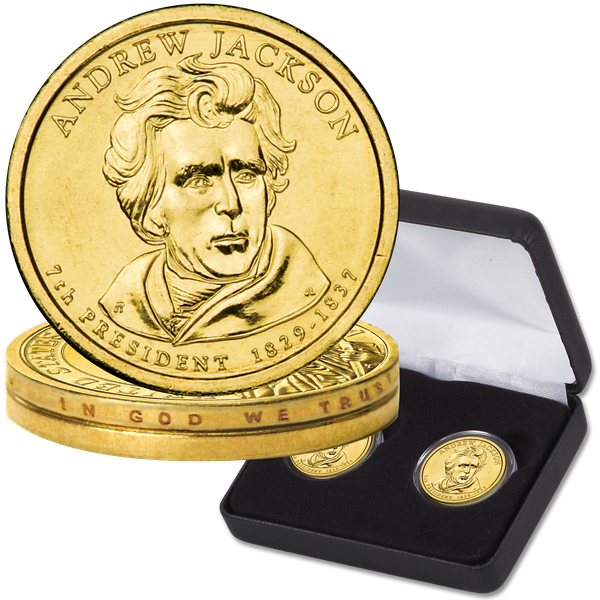
While only one Sacagawea dollar is known to have gained edge lettering in 2007, it wasn’t the only edge lettering error that year. The Philadelphia Mint also struck and released first-year Presidential dollar coins that <em> should</em> have received edge lettering but skipped that stage of production.
In addition to its date and mint mark, each coin’s edge should have featured the mottoes e pluribus unum and in god we trust. As a result, they were nicknamed “Godless” dollars” and caused quite a commotion.
The George Washington pieces from 2007 circulated widely, giving many collectors their first real taste of a modern dollar error. But they weren’t the only ones. The following year, “Godless” Andrew Jackson dollars were issued as well.
The plain edge makes them instantly noticeable. And serves as a vivid reminder of the challenges involved in adding lettering to an already complex striking process.
The 1979-P Susan B. Anthony Dollar Struck on a Quarter Planchet
The short-lived Susan B. Anthony dollar series also produced a few exciting error coins. But instead of edge lettering issues, these were planchet mix-ups.
During the first year of the series, the Philadelphia Mint accidentally struck a few 1979-P Anthony dollars on quarter planchets. The new dollars were only slightly bigger than quarters. But the smaller and thinner quarter blanks caused the design to spread out, and the reeded edge to appear incomplete or distorted.
Collectors enjoy these error coins today because they show it wasn’t just the public that got the two denominations confused.
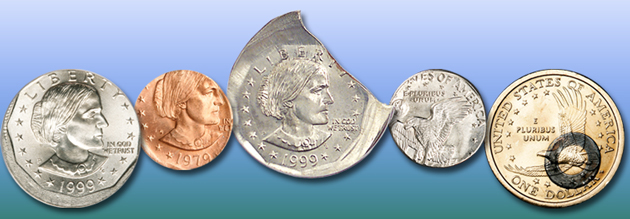
The 1999-P Susan B. Anthony Dollar Struck on a Sacagawea Planchet
Susan B. Anthony coin errors gained extra interest in 1999, when their production briefly resumed as the mint transitioned to new, larger Sacagawea dollars.
And once again, it was due to planchet errors.
Some planchets intended for the golden Sacagawea dollars, ended up in presses striking Anthony dollars. The result is a copper-nickel Anthony obverse that’s the wrong size and color. These off-metal strikes stand out dramatically and illustrate the occasional overlap when two different dollar programs ran at the same facility.
The 2026 Mayflower Compact Quarter Struck-Through Error
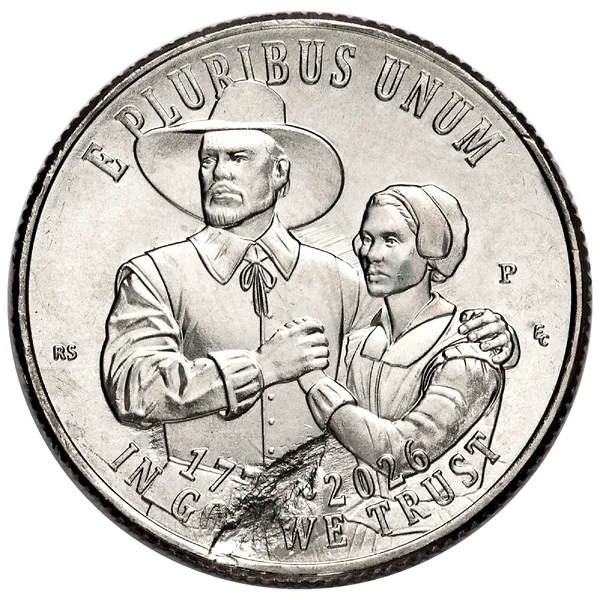
Last, but certainly not least, we have one of the newest and most dramatic coin errors that arrived with the U.S. Mint’s Semiquincentennial quarters series.
In early 2026 a Philadelphia Mint bag of Uncirculated Mayflower Compact quarters revealed coins with a struck-through error caused by feeder finger die damage on the obverse.
This error was caused when feeder fingers (used to feed blanks into a striking chamber) slid across the surface of the die, creating grooves and small pits that were then transferred to each coin struck. That movement was also responsible for depositing debris on the die, which created the struck-through error.
The design itself honors the 1620 Mayflower Compact with Pilgrims on the obverse and the ship on the reverse, tying directly into America’s founding story. The quarters were the first in the series honoring the United States’ 250th anniversary.
Most error coins don’t escape in significant quantity. And those that do are rarely as dramatic and noticeable as these. So it’s not surprising they are already in high demand.
If you want one for your collection, you can grab one here from Littleton while supplies last.
Do you have Error Coins in your collection?
Of course, these are just a few of the many exciting coin errors you might run across. And if you’re like me, you’ll love how they bring history, human fallibility and a bit of surprise together in one small package.
Coin errors occur at every U.S. Mint facility when dies shift, planchets mix or foreign material interferes with the strike. Yet they are almost always caught by the mint’s strict quality control measures. Which is why those that escape are so special to collectors.
Whether you search pocket change… examine rolls from your bank… or study examples already in collections… each one offers a tangible connection to the people and processes behind American coinage.
So the next time you handle a handful of coins, take an extra moment and look closely. You never know when an exciting U.S. coin error might be waiting to be discovered!
Happy collecting!
Sources
“Counterfeit Detection: 1937-D Three-Legged Buffalo Nickel.” Numismatic Guaranty Company. July 16, 2024. Accessed April 22, 2026. https://www.ngccoin.com/news/article/13006/counterfeit-detection-three-legged-nickel-outright-fake/
“Statehood Quarter Error Coins.” Littleton Coin Company. Accessed April 22, 2026. https://www.littletoncoin.com/shop/Statehood-Quarters-Error-Coins
“Sacagawea & Native American Dollar Errors” Littleton Coin Company. Accessed April 22, 2026. https://www.littletoncoin.com/shop/Native-American-Sacagawea-Dollars-Error-Coins
GreatCollections. “Sacagawea $1 Error with Presidential Edge Lettering to be Sold by GreatCollections” CoinNews. June 25, 2012. Accessed April 22, 2026. https://www.coinnews.net/2012/06/25/sacagawea-1-error-with-presidential-edge-lettering-to-be-sold-by-greatcollections/
Paul Gilkes. “The only Sacagawea $1 with edge lettering just sold.” Coin World. August 1, 2012. Last Accessed April 22, 2026. https://www.coinworld.com/news/us-coins/sacagawea-dollar-with-edge-inscription-realiz.html
LCC Writing Team. “Add drama to your collection with Error Coins!” Heads & Tails by Littleton Coin Company. Last Updated May 31, 2024. Accessed April 22, 2026. https://blog.littletoncoin.com/error-coins/
LCC Writing Team. “Error Coins Continued” Heads & Tails by Littleton Coin Company. Last Updated June 19, 2018. Accessed April 22, 2026. https://blog.littletoncoin.com/error-coins-continued/

