
250 years later…
How George Washington Saved Boston
Today, we’re heading back to the classroom and talking about George Washington’s relationship with the capital of Massachusetts. So, before we get started, I’d recommend grabbing your Dunks and then pahking the cah in Havahd yahd for this history lesson!
Have you ever heard about Evacuation Day in Boston? Chances are you’ve heard about the Siege of Boston, when the British took and maintained control of the crucial colonial city. But when and how were the British kicked out? Honored on March 17, Massachusetts’ Suffolk County (home to cities like Boston, Revere and Chelsea) celebrates Evacuation Day as that victorious day when Washington forced the British out of Boston.
Here Comes the General
Newly elected as the burgeoning nation’s first commander in chief, George Washington took his position seriously. Why Washington? Aside from being well spoken, this wasn’t his first time commanding men on the battlefield. A veteran, Washington had gained his military experience two decades earlier.
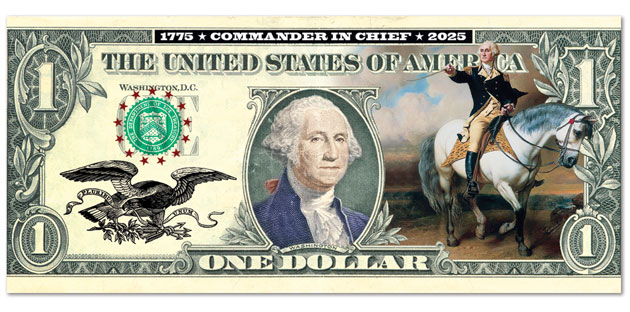
In his twenties, Washington served as a lieutenant colonel during the French and Indian War. It was here he saw the price of combat first hand. And in May 1754, Washington was forced to surrender – the only time in his career that he would do so.
Following his failed encounter against the French troops and facing being moved to a lower rank, Washington resigned from the army. But the following year, he volunteered to work as an aide to General Edward Braddock, the British commander in chief. During his second stint serving in the war, Washington would lead the Virginian forces. Four years after surrendering to the French, he would begin his political career after entering Virginia’s House of Burgesses*.
As the French and Indian War raged on, the young Virginian leader became disenchanted with both the British Army and monarchy. Washington’s love for the American colonies and dissatisfaction at the colonists’ treatment pushed him to fight in the American Revolution.
Finally, on June 15, 1775, Washington’s passion for his fellow countrymen came to a head. A unanimous vote at Independence Hall by the First Continental Congress made one thing clear – General George Washington was the man to lead the charge for independence.
The Revolution Begins
In 1776, mere months before the Declaration of Independence was signed, General Washington brought the 11-month Siege of Boston to a close. But before we can talk about how Washington took Boston back, we have to talk about why the British had the city to begin with.
Which means we need to wind the clock back to Paul Revere’s midnight ride.
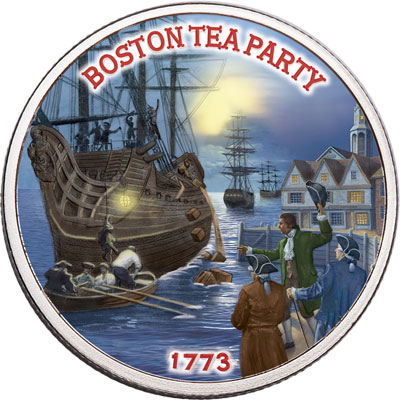
Since the Boston Tea Party, Massachusetts Bay Colony had been under the close eye (and even closer thumb) of the British. In retaliation for the colonists’ insolence, King George III had enacted the Coercive Acts of 1774 – otherwise known as the Intolerable Acts. These laws gave the British authorities even more power over the colonists, causing relationships between the colonists and British to deteriorate even further.
Which leads us to April 18, 1775.
After learning of plans to arrest Samuel Adams and John Hancock, it was time to sound the alarm. This is where Paul Revere and William Dawes enter the picture. Armed with this knowledge, the men took off into the Massachusetts countryside. Heading towards Lexington, Revere called out warnings to the local militia who were able to assemble at a minute’s notice (hence the name Minute Men!). Hearing the call to action, the colonists marched to Lexington & Concord where they met the British in the early hours of April 19 and the shot heard ‘round the world was fired.
Occupying the Birthplace of the Revolution
After the Battles of Lexington & Concord, many of the colonists living in Boston left while British forces and citizens loyal to the Crown gained control of the city. But that didn’t mean the colonists would give up their city easily. Over the next few months, America’s patriots made it clear reconciliation with Great Britain would not happen with:
- The capture of Fort Ticonderoga – In the early hours of May 10, 1775, Ethan Allen and the Green Mountain Boys (who numbered less than 100!) launched their attack on the British at New York’s Fort Ticonderoga.
- The creation of the Continental Army – Authorized by the Second Continental Congress on June 14, 1775, the makeshift army was made up of native colonists, immigrants and freed & enslaved African-Americans.
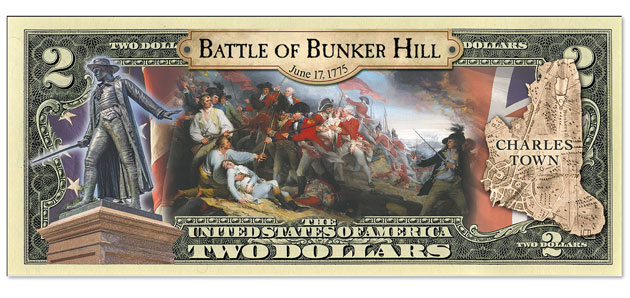
- The Battle of Bunker Hill – Fought on June 17, 1775, the colonists faced off against the British just outside the city of Boston. While the colonists did lose the battle, they were able to take down a considerable portion of the powerful British Army.
Taking Back Boston
Okay, now that we’ve got the background, let’s fast forward to March 1776.
Initially, General Washington wanted to attack the British forces using the frozen harbor. But Washington’s idea was deemed too risky and a plan to use Dorchester Heights was proposed.
Crucial to the plan’s success, was the use of newly captured artillery from Fort Ticonderoga. Henry Knox, a Bostonian bookseller who would become a respected general and a member of Washington’s cabinet during the latter’s presidency, was tasked with retrieving the cannons. The journey to bring the artillery back to Boston lasted several months, so by the time the cannons arrived, Washington was ready to begin the attack.
On March 4, the Continental Army worked under the cover of darkness. Using straw to help muffle the noise as supplies were moved uphill, the soldiers moved 59 cannons before dawn. When the British awoke the next morning, they were shocked that the seemingly ragtag army had taken control of Dorchester Heights overnight.
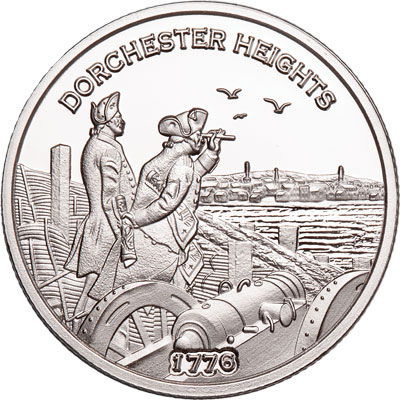
Coincidentally, the following day (the 5th of March) marked the sixth anniversary of the Boston Massacre – a scene which had burned itself into the minds of citizens in all thirteen colonies. Leading the charge, Washington could be heard calling out, “Remember it is the fifth of March! Avenge the death of your brethren!”
Aware that the colonists had them trapped, British General William Howe sent a letter to Washington proposing a truce. In exchange for being allowed to leave safely, the British wouldn’t destroy the city. America’s commander in chief accepted the terms and, on March 17, almost 11,000 British soldiers and Loyalists sailed out of the harbor. This left Boston wide open for the Continental Army and ended the Siege of Boston after 11 long months.
But Washington wasn’t – couldn’t be – done. Almost immediately after the siege’s conclusion, the general marched to New York which the British had begun to circle. But in the meantime, Washington could rest easier knowing Boston was back in the colonist’s hands.
Happy Evacuation Day!
Today, Massachusetts celebrates General Washington driving the British out as Evacuation Day in Boston. And this year the Bay State has special events planned to ring in this extra special anniversary of the commander in chief’s success in the Revolution.
It’s hard to believe that just 250 years ago, colonists were fighting for our nation’s independence. Evacuation Day in Boston means more than a local holiday for Massachusetts residents. It stands for the freedom that our founding fathers fought so hard to win for America’s citizens. So, grab your flag and wave it proudly for George Washington today (and every day!).
Here’s wishing you a very happy 250th Evacuation Day!
* This was where the colony’s elected representatives in the Virginia General Assembly’s lower house served.
Sources:
National Park Service. “Washington’s Appointment as Commander in Chief of the Continental Army.” Accessed November 25, 2025. https://www.nps.gov/articles/000/washingtoncommission.htm#:~:text=June%2015%2C%201775—after%20a,not%20take%20this%20appointment%20lightly.
National Park Service. “Timeline: George Washington and The French and Indian War.” Accessed November 25, 2025. https://www.nps.gov/common/uploads/teachers/lessonplans/Resource%20timeline%20unit%203%20BGW%20(508).pdf
Maurer, Elizabeth L. “Washington and the French & Indian War.” Accessed November 25, 2025. https://www.mountvernon.org/george-washington/french-indian-war/washington-and-the-french-indian-war#:~:text=For%20Washington%20the%20French%20and,ambitious%20man%20when%20he%20volunteered.
Zielinski, Adam E. “Siege of Boston.” Accessed November 25, 2025. https://www.battlefields.org/learn/articles/siege-boston#:~:text=Among%20his%20subordinates%20were%20Major,a%20former%20bookstore%20from%20Boston.
American Battlefield Trust. “Boston: Siege of Boston.” Accessed November 25, 2025. https://www.battlefields.org/learn/revolutionary-war/battles/boston
Americana Corner. “The Continental Army Retakes Boston.” Accessed November 25, 2025. https://www.americanacorner.com/blog/siege-of-boston-ends
Secretary of the Commonwealth of Massachusetts. “Evacuation Day.” Accessed November 25, 2025. https://www.sec.state.ma.us/divisions/state-house-tours/did-you-know/Evacuation-Day.htm#:~:text=Evacuation%20Day%20commemorates%20the%20events,taxes%20and%20keep%20the%20peace.
Boston Tea Party Ships & Museum. “Continental Army Historical Facts.” Accessed November 25, 2025.https://www.bostonteapartyship.com/facts-continental-army#

