
I speak for the trees…
Unbe-leaf-able coins to celebrate Earth Day history
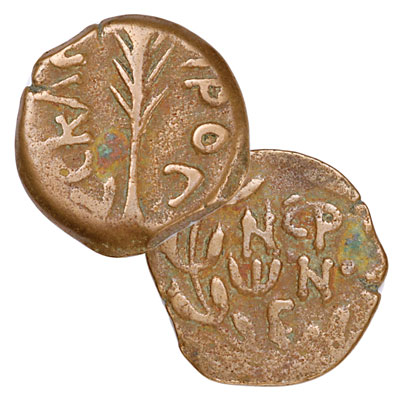
When it comes to coins and the Earth, they’re just two peas in a pod. Made from various metals like silver and gold or copper-manganese, the roots that connect coins to the planet run deep.
But that’s not the only way these two seemingly different worlds collide! Themes depicting animals have graced coinage around the world since humans started minting coins. I guess you could say that together coins and Earth are, quite simply, the bee’s knees.
In honor of our favorite planet, we’re going to do a little spelunking into Earth Day history.
The First Earth Day
Trivia time! Do you know when the first Earth Day event was held? The Swinging Sixties had come to a dramatic close just a few months before and cultural change was on everyone’s mind. Governing the nation was America’s 37th president, Richard Nixon.
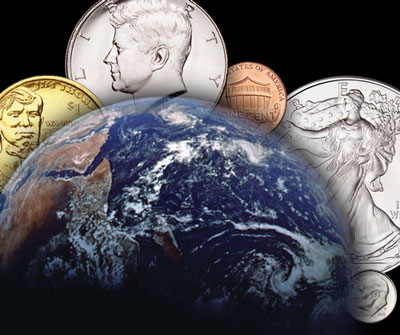
On the horizon, a storm was brewing. A year before the first Earth Day, man-made disasters abounded. Fresh on the nation’s mind was the Santa Barbara Oil Spill, which saw three million gallons of oil pour into the ocean. While Ohio’s Cuyahoga River Fire helped shed light on pollution in local communities and habitats. Environmentalists worked around the clock to call attention to mankind’s dangerous environmental impact.
Here’s where Wisconsin senator (later governor), Gaylord Nelson, stepped up. Following the example of sit-ins surrounding the Vietnam War and Civil Rights, he proposed teach-ins on college campuses. The grassroots campaign caught on quickly. Before he knew it, Nelson was inundated with letters from schoolchildren, teachers, churches and communities across the country wanting to participate.
So, on Wednesday April 22, 1970, following months of careful planning and anticipation, the first Earth Day events were held. From coast to coast, twenty million people turned out in support of Nelson’s vision for a greener future. Spurred on by the will of the American people, the Environmental Protection Agency – along with numerous environmental acts – was created.
In the years since that first event, Earth Day has become an international day of care for the planet. Today, events are held in classrooms and communities around the world celebrating our big and beautiful blue marble.
The Father of the Green Revolution
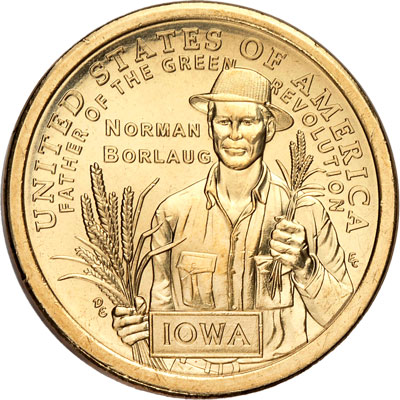
The same year that Gaylord Nelson’s vision for Earth Day was put into action, a certain scientist from Iowa was busying accepting the Nobel Peace Prize for his work in developing a new type of wheat. Taking his place in Earth Day history, is Dr. Norman Borlaug. A passionate advocate of ending world hunger, Dr. Borlaug spent his career as a plant pathologist.
In 1944, Dr. Borlaug took a position in Mexico at the Cooperative Wheat Research and Production Program. It was here that he would look for ways to create sustainable and high-yielding varieties of wheat. Working with people from around the world, Dr. Borlaug changed how the world ate.
The first step was altering the growing cycle. By using the method called “shuttle breeding,” Dr. Borlaug was able to create not one but two successful planting seasons a year. During the summer growing season, Dr. Borlaug and his scientists would grow near Mexico City – a high altitude location. And then, during the winter, the group would move the plants north to the Yaqui Valley (part of the Sonoran Desert).
Following this success, Dr. Borlaug worked to create a strain of wheat that could prevent widespread famine in different parts of the world. Finally, in 1950, the doctor from Iowa succeeded with the creation of the Yaqui 50. Today, wheat around the world is descended from Dr. Borlaug’s revolutionary variety.
The Mighty Jungle
Rounding out our deep dive into Earth Day history, is the Endangered Species Act. A direct result of the success surrounding Earth Day, President Nixon passed the act three years later. Although the original version had been passed in 1969, the Endangered Species Act of 1973 offered more protection to America’s wildlife.
Designed to safeguard dwindling species of animals and plants, the 1973 act included penalties for those found guilty of harming a species on the list. Since its inception, over 90 animal species have come off the endangered list (otherwise known as “delisted”). But there’s still plenty of work to do and Earth Day is the perfect day to start! Here at Littleton we have a few suggestions to grow your collection celebrating the planet and all its inhabitants:
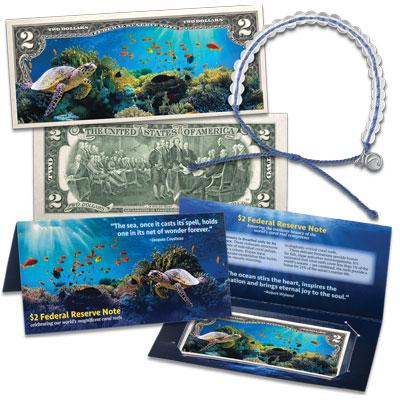
Jump on in and make a change with a vibrant bracelet and LCC exclusive colorized note. Produced by the company 4ocean™, who is dedicated to cleaning up the waters that make our planet so blue, this bracelet is actually made from recycled materials – it even includes plastic found in the ocean! Accompanying it, we’ve created a beautiful $2 note that takes you on a trip down under to see a coral reef and the sea creatures that call it home.
Of course, our Endangered Species Collection is a great way to learn about different endangered animals around the world. This 15-coin set offers an informative look at some of the planet’s most-at-risk creatures. You’ll find animals like the black-and-white ruffed lemur which are known for their lively yellow eyes, the golden mantella frog that measures about an inch long and a scalloped hammerhead shark who can live up to 20 years.
Or, if you’re interested in finding out about various habitats, check out this Climate Zones Collection. Totaling 10 different coins, this set takes you on a unique journey. From the subtropics of China where the adorable Panda Bear lives all the way to the continental subarctic where you’ll find the ferocious Wolverine and everywhere in between, you’ll learn about the different ecosystems that make up Earth.
Happy Earth Day
Get ready to rock and roll right into Earth Day 2026!
Whether you’re participating in an event sponsored by your local community, doing your part to reduce, reuse, recycle, or planting a tree, we hope you get out and celebrate your favorite planet. After all, it is the only one with coins! So, this Earth Day (and every day), may the forest be with you.
Sources:
Nelson, Gaylord. “Earth Day ’70: What It Meant.” Accessed January 14, 2026. https://www.epa.gov/archive/epa/aboutepa/earth-day-70-what-it-meant.html
Lewis, Jack. “The Spirit of the First Earth Day.” Accessed January 14, 2026. https://www.epa.gov/archive/epa/aboutepa/spirit-first-earth-day.html
United States Environmental Protection Agency. “EPA History: Earth Day.” Accessed February 5, 2026. https://www.epa.gov/history/epa-history-earth-day
PBS. “The Green Revolution: Norman Borlaug and the Race to Fight Global Hunger.” Accessed January 22, 2026. https://www.pbs.org/wgbh/americanexperience/features/green-revolution-norman-borlaug-race-to-fight-global-hunger
The Nobel Prize. “Norman Borlaug Biographical.” Accessed January 26, 2026. https://www.nobelprize.org/prizes/peace/1970/borlaug/biographical
University of Minnesota. “The Researcher.” Accessed February 10, 2026. https://borlaug.cfans.umn.edu/about-borlaug/researcher#:~:text=By%20the%201970’s%20Borlaug’s%20wheat,continue%20to%20feed%20the%20world
National Park Service. “The 1969 Cuyahoga River Fire.” Accessed February 5, 2026. https://www.nps.gov/articles/story-of-the-fire.htm


Rachael, what a well research and written article. Thanks for your concern and actions to save our planet.
Hi Carl, I’m glad you enjoyed the article! Here’s to a brighter – and greener – future. – Rachael